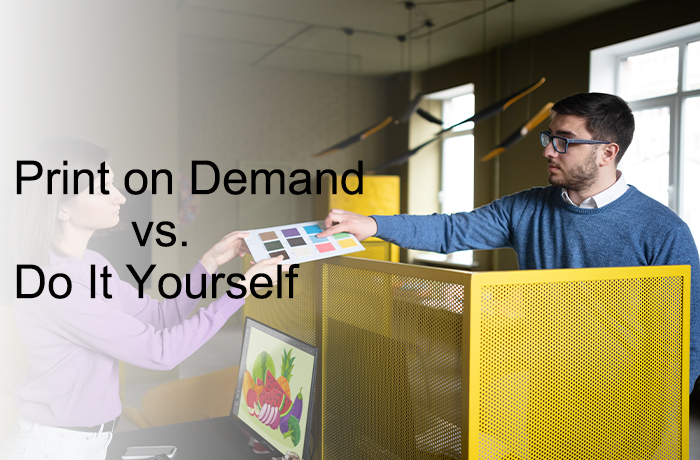
Some entrepreneurs hesitate to use print-on-demand because they worry about quality control or low profit margins. On the flip side, taking the DIY approach can feel like a massive headache early on—especially when you factor in the learning curve for printing equipment and the hassle of shipping.
In this article, we’ll dive into these two popular fulfillment models—Print on Demand and Do It Yourself—and use a data-driven comparison to help you make the smartest choice for your business. Assuming you’re already familiar with the basics of POD and DIY, we’ll skip the definitions and jump right in.
POD vs. DIY: A Side-by-Side Comparison
If you’re short on time, here is a quick breakdown of how these two fulfillment models compare on essential business metrics.
| Feature | Print on Demand (POD) | Do It Yourself (DIY) |
| Cost | Extremely low (no upfront equipment or inventory investment required) | High (requires investment in basic printing equipment and initial inventory) |
| Time and effort | Low (focus on design and marketing; platform handles fulfillment) | High (requires handling procurement, production, packing, and shipping yourself) |
| Product diversity | Extremely high (can test and list hundreds of products without financial risk) | Limited (constrained by your budget, existing equipment, and physical storage space) |
| Quality | Reliant on the provider (ordering a sample before selling is highly recommended) | Fully controllable (finished product quality depends entirely on your skills and standards) |
| Design templates & workflow | Automated (platform provides digital templates; system aligns designs automatically) | Manual (requires physical measurement of the print area and manual alignment of materials) |
| Uniqueness | Medium (custom designs on standard blanks; can be enhanced with custom packaging) | Extremely high (supports highly personalized crafts, special materials, and personalized experiences) |
Cost

Print on demand (POD)
With POD, you won’t spend a dime on printing equipment or warehouse space. You only incur costs when an item actually sells, which drastically lowers your startup expenses. Since you only pay for production after the customer has paid you, your financial risk is practically zero.
Do it yourself (DIY)
Going the DIY route requires real upfront capital. To set up a basic home printing studio, you’re typically looking at:
- Heat press: $200 – $500
- Sublimation / DTF printer: $300 – $800+
- Supplies (ink, transfer paper, etc.): $150+
- Initial blank inventory (e.g., standard t-shirts): $200+
Before you even make your first sale, you are looking at an initial investment of roughly $850 to $1,650. On top of that, warehousing and shipping costs can add up quickly. POD companies usually partner with major carriers to secure bulk shipping discounts; if you are shipping independently as a retail customer, your postage costs will be significantly higher. And that doesn’t even factor in the cost of basics like poly mailers and a thermal label printer.
Time and effort

Print on demand (POD)
POD saves you from printing, packing, and shipping—the most time-consuming parts of the production process. You can focus your valuable time and energy on product design, marketing, and brand building. The POD provider handles all the tedious behind-the-scenes work, allowing you to focus on growing your business.
Do it yourself (DIY)
This hands-on approach requires a massive investment of time and physical labor. You’ll be in charge of every single step: sourcing raw materials, operating the machinery, crafting the products, folding, packing, and scheduling carrier pickups. While this process can be incredibly rewarding for makers and crafters, it can quickly become overwhelming once your daily order volume starts to skyrocket.
Product diversity
Print on Demand (POD)
An established POD company offers a massive product catalog, featuring everything from t-shirts and hoodies to custom shoes, bags, and home goods. You can easily test various product types, sizes, and designs without the burden of buying inventory upfront. This flexibility lets you move quickly, test ideas, and explore different niches. If a product doesn’t perform well, you can just pull it from your store without taking a financial hit.
Do It Yourself (DIY)
Under a DIY model, your initial product line is heavily restricted by your budget and physical workspace. Expanding your catalog is incredibly difficult because the equipment you need to print on a ceramic mug (like a mug press) is entirely different from what you need for a cotton t-shirt. This requires an ongoing stream of capital investment, which is often too much for a beginner entrepreneur to handle.
Quality
Print on demand (POD)
With POD services, product quality heavily relies on your supplier’s equipment and the base products you choose. To accurately gauge this, we highly recommend ordering samples before selling anything to the public. When ordering samples from reliable partners like JetPrint, Printify, or Printful, new users can take advantage of an exclusive 5% discount. This allows you to check out the print vibrancy and overall product quality firsthand at a very low cost.
Some sellers do bring up issues with inconsistent quality, and this is a valid concern. However, this is most often the result of using different base products. For instance, if you offer T-shirt A and T-shirt B—even though they’re both tees—variations in the fabric and the workers’ sewing techniques will naturally lead to differences in the final product. Speaking from our own experience, when we produce an item, we always calibrate the machines first to ensure the physical print perfectly matches the colors in the mockup.
Do it yourself (DIY)
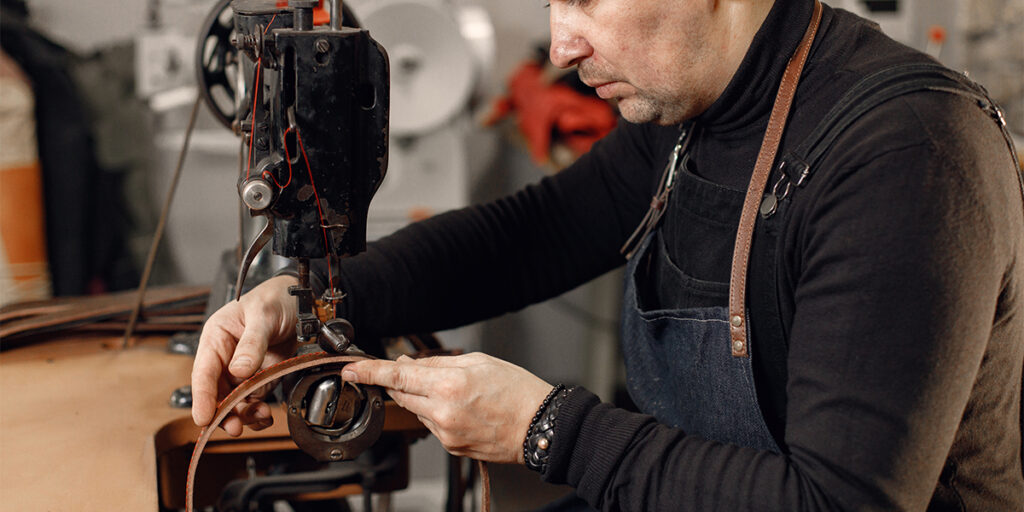
With DIY, product quality comes down entirely to your skill level, how well you maintain your equipment, and your attention to detail. While you do have 100% control over the production process, hitting consistent, “retail-ready” quality requires a massive time investment to hone your craft. The major upside, however, is that if you spot a printing flaw, you can catch it immediately and reprint it, ensuring no defective items ever make their way to your customers.
Design templates & workflow
Print on demand (POD)
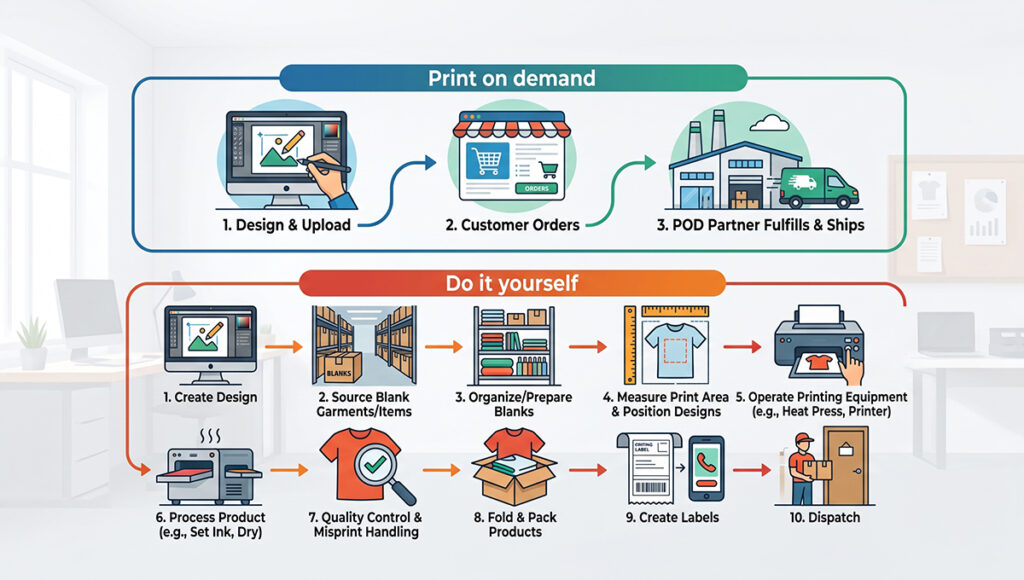
POD services typically offer intuitive digital design templates—like PSD files or online drag-and-drop generators—to streamline the product creation process. Each item comes with a predefined print area. You simply upload your design, and the system automatically ensures the final production aligns exactly with your preview. At JetPrint, if the automated system ever struggles to match the mockup perfectly, we have dedicated designers step in to handle the alignment manually.
Do it yourself (DIY)
If you go the DIY route, you have to physically align every single print yourself. You will need to manually measure the print area, perfectly position the transfer paper on the garment, and precisely dial in the temperature and pressure on your equipment. This approach comes with a steep learning curve, and beginners should expect a high rate of misprints and wasted materials early on.
Uniqueness
Print on demand (POD)
Achieving true uniqueness can be difficult with POD services because these platforms cater to thousands of sellers using the exact same base products—meaning your designs are the only real differentiator. However, if you are dedicated to building a strong brand identity, you can elevate the customer experience by partnering with premium POD suppliers that offer custom packaging, branded labels, and custom greeting cards. Fortunately, most major POD companies provide these branding options today, including Apliiq, Printify, and JetPrint.
Do it yourself (DIY)
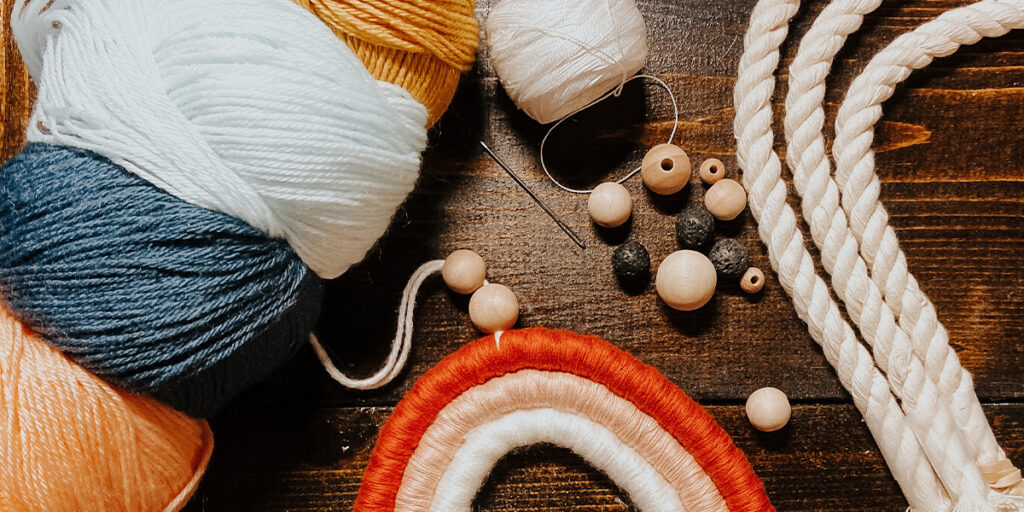
If your main goal is to offer one-of-a-kind, highly customized, or completely handmade products, DIY is hands down the best route to take. For instance, custom beaded bracelets, hand-painted denim jackets, and handmade plush toys are incredibly popular on platforms like Etsy. These types of items rely on specific materials and a personal, handcrafted touch that mass-produced POD simply cannot replicate.
Which path is right for you?
Choosing between Print on Demand and Do It Yourself comes down to your specific business goals, budget constraints, and personal preferences.
Choose Print on Demand (POD) if you:
- Have limited startup capital and want to minimize your financial risk.
- Are running this as a side hustle and don’t have the time to manually pack and ship orders every day.
- Want to quickly test multiple niches and hundreds of designs.
- Have core strengths that lie in graphic design and digital marketing.
Choose Do It Yourself (DIY) if you:
- Want 100% absolute control over product quality, custom packaging, and the unboxing experience.
- Are they selling highly customized, one-of-a-kind goods or purely handmade products (like an Etsy crafter)?
- Have plenty of upfront capital to invest in equipment and the physical space to store inventory.
- Want to maximize your profit margin on every single item.
Before making a decision, take stock of the resources you have on hand and carefully weigh the pros and cons of both models. Keep in mind that whether you go with POD or DIY, the ultimate success of your business comes down to your focus, marketing strategy, and dedication to providing exceptional value to your customers. Simply picking one model over the other is not a guaranteed ticket to profitability.
FAQ
How can I find a reliable POD provider?
Look for a provider that offers an extensive product catalog, transparent pricing, and seamless integration with your e-commerce platform (like Shopify or Etsy). Be sure to check real customer reviews regarding their shipping times and print quality. Most importantly, order test samples first—platforms like JetPrint even offer sample discounts, allowing you to verify their quality before fully committing.
Can I use a mix of POD and DIY for my business?
Absolutely. Many brands actually use a “hybrid model.” You can take the DIY route to print your best-selling core items (like standard embroidered hoodies) in-house to maximize profit margins, while leveraging POD to offer a wider variety of colors, complex all-over prints, or to handle international orders without the stress of holding extra inventory.
Is Print on Demand a good fit for small businesses?
Yes, it’s a perfect fit. POD is arguably the ideal fulfillment model for beginners and small businesses. Because it requires zero upfront inventory investment and handles the entire order fulfillment process, a solopreneur can build and scale a global e-commerce brand with just a laptop—no warehouse space or logistics team required.
What equipment do I need to start a DIY business?
To produce professional-grade prints at home, you’ll need a commercial heat press, a specialized printer (like a sublimation, DTF, or high-quality inkjet printer), transfer paper, specialty ink, and a batch of blank inventory. You’ll also need shipping supplies, such as poly mailers, a thermal label printer, and a shipping scale. If you plan on doing embroidery at home, you will need to add an embroidery machine to that list.
Can I switch from one model to the other if my business needs change?
Absolutely. E-commerce businesses pivot their strategies all the time. Many entrepreneurs start with POD for risk-free market testing, and once their sales become steady and predictable, they invest in equipment and bring production in-house (DIY) to boost their profit margins. Conversely, many successful DIY sellers eventually outsource their fulfillment to a POD provider once their daily order volume skyrockets and they can no longer keep up with the packing and shipping themselves.
0 Comments