As an industry leader, the platform boasts a massive user base and a huge product catalog. However, the constant influx of sellers has brought about a few growing pains—namely, occasional inconsistencies in print quality, fluctuating shipping times, and unstandardized packaging.
Many blogs list various print-on-demand marketplaces as alternatives to Printify. While these alternatives make sense since they cater to a similar audience, their underlying business models are actually very different. We believe this comparison is not entirely fair. Since we’ve already broken down these differences in detail in our “What is Print on Demand” article, we won’t dwell on them here.
Instead, this post focuses exclusively on companies that operate on the exact same fulfillment model as Printify. We’ve evaluated and ranked the top 9 true Printify alternatives based on print quality tests, profit margins, fulfillment speed, and platform integrations to help you find the best partner for your brand.
Top Printify Alternatives at a Glance
Before diving into the detailed reviews, here’s a quick comparison table of the leading POD suppliers to help you pinpoint the best option for your specific business needs.
| Company | Best for (core alternative reason) | Fulfillment model | Key integrations |
| JetPrint | Escaping the race to the bottom: High-margin POD shoes & watches. | Global network & direct facilities | Shopify, Etsy, WooCommerce, Wix |
| Apliiq | Commanding brand premiums: Authentic embroidery & woven labels for streetwear. | High-end LA-based supply chain | Shopify, Etsy, WooCommerce |
| Prodigi | Fixing color discrepancies: Gallery-grade wall art & fine paper goods. | UK in-house + vetted global network | Shopify, Etsy, Custom API |
| Subliminator | Simplifying shipping costs: Flat-rate pricing (shipping included) & premium AOP. | Dedicated AOP facilities (China) | Shopify, Etsy |
| Gelato | Beating cross-border delays: Localized printing for fast, duty-free shipping. | 130+ local print partners worldwide | Shopify, Etsy, WooCommerce, Wix |
| Printful | Ending quality roulette: In-house premium quality control & custom packaging. | Global in-house facilities | Shopify, Etsy, Amazon, TikTok Shop |
| CustomCat | Maximizing ROI: Ultra-low base prices for high-volume sellers (DIGISOFT). | Large-scale US facility (Detroit) | Shopify, WooCommerce, Etsy |
| Contrado | Entering the luxury market: 140+ premium fabrics & London-based cut-and-sew. | In-house London facility | Shopify |
| Art of Where | Conquering north America: Hassle-free Canadian shipping & boutique textiles. | In-house Canadian facility | Shopify, Etsy, Squarespace |
1. JetPrint
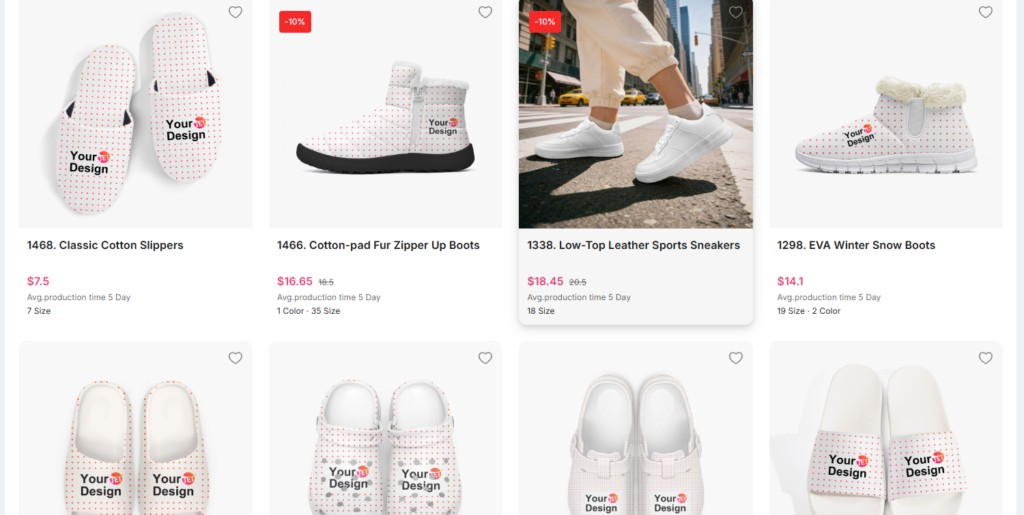
If you want to sell products that your competitors simply can’t find on Printify, JetPrint is an outstanding choice. While most POD companies lean heavily on basic apparel, JetPrint stands out in the high-ticket, highly customized niche.
With a catalog of over 700 items, JetPrint is best known for custom footwear (sneakers, boots, and slippers), watches, and leather bags. Because these are high-perceived-value items, they allow POD sellers to command much higher retail prices and profit margins compared to a standard t-shirt.
Pricing: Free to use. The base costs are highly competitive, leaving plenty of room for profit.
The main reason to choose it over Printify:
The problem with Printify: Their product catalog is heavily saturated with basic tees and mugs. This often forces sellers into a race to the bottom on price, resulting in razor-thin profit margins per item.
The JetPrint advantage: It fills the gap for high-ticket, hard-to-replicate product categories. By offering unique items like custom sneakers, boots, and premium watches that Printify lacks, JetPrint helps sellers escape the price wars and achieve strong profit margins of $15 to $35 per order.
2. Apliiq
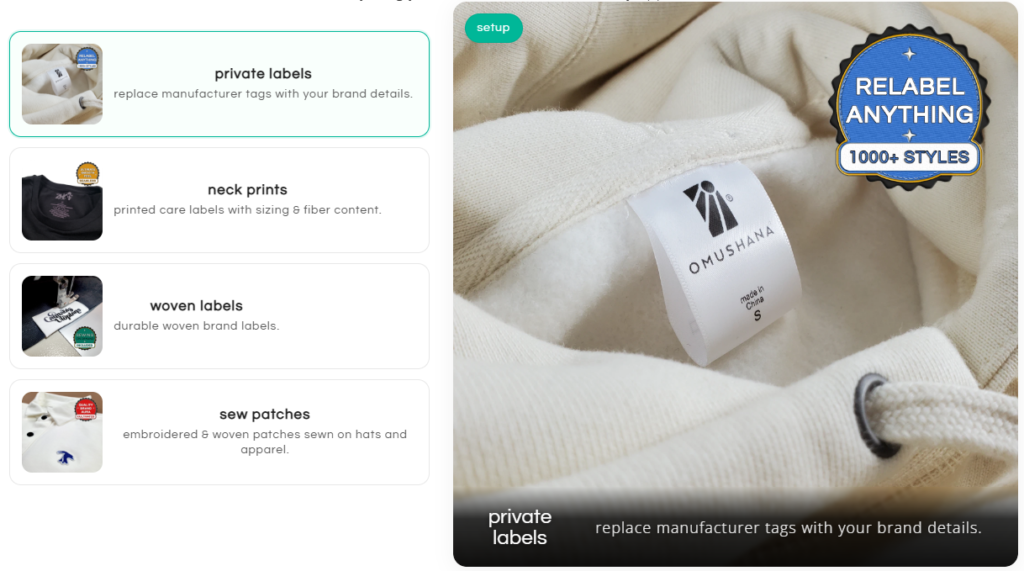
Headquartered in Los Angeles, Apliiq is the go-to POD platform for streetwear and premium private label sellers. Unlike most platforms that stick to basic DTG printing, Apliiq’s core strength lies in its incredibly deep apparel customization options.
They do way more than just print on shirts—they let you add custom woven labels, embroidered patches, premium neck tags, and even appliqué. Without a doubt, Apliiq’s LA-based apparel supply chain delivers the most authentic streetwear feel you can get.
Pricing: The app is free to use. Plus, if you purchase in bulk ahead of time, you can take advantage of generous volume discounts.
The main reason to choose it over Printify:
The problem with Printify: Their customization options are pretty limited. They lack premium finishing touches like sewn-in care tags or side woven labels, leaving your products looking like generic, soulless promo tees that make it difficult to justify a premium price tag.
Apliiq’s advantage: They specialize in “true branding.” By offering services like custom embroidered patches and genuine sewn-in woven labels, Apliiq helps your products completely shed that “cheap print-on-demand” vibe, elevating them into a fully realized streetwear brand.
3. Prodigi
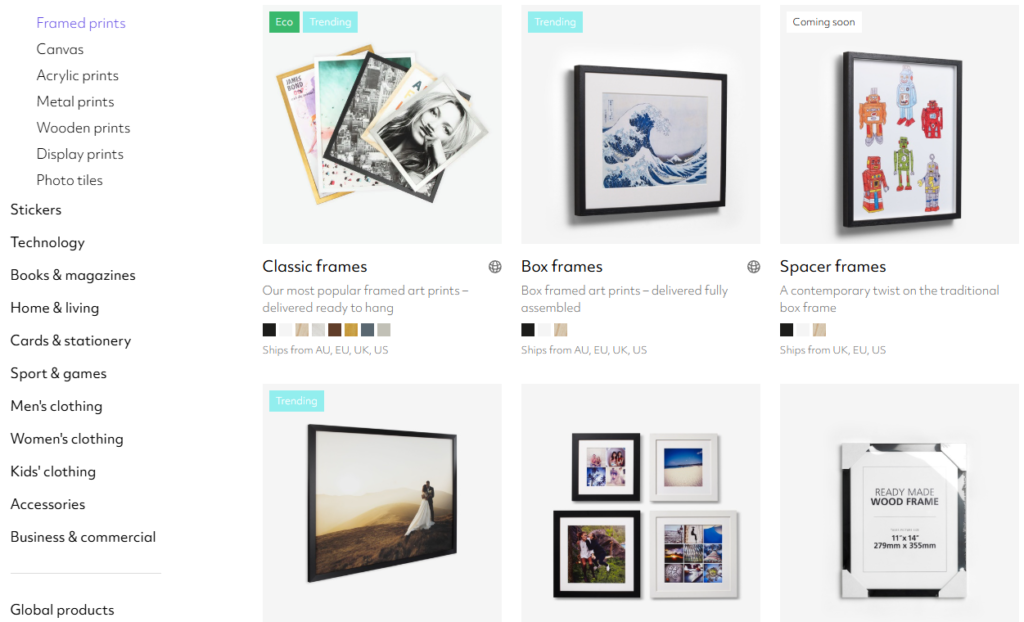
Prodigi is a UK-based, global POD platform that operates its own in-house facilities alongside a strictly vetted global network of fine art printers. Unlike Printify, which tends to be geared toward mass-produced posters, Prodigi’s core DNA is all about fine art-grade printing.
Their clientele includes art galleries, illustrators, and professional photographers from all over the world. They offer museum-quality Giclée art prints, premium framed art (with various frame styles to choose from), photo tiles, and high-quality metal prints. If you run a brand centered around visual art, Prodigi delivers a level of quality and texture that standard POD platforms simply can’t match.
Pricing: Free to use. There are no monthly subscription fees; you only pay for the actual production costs as orders come in.
The downside: Their apparel catalog is much narrower than what you’d find on Printify or Printful, focusing mostly on basic everyday items.
The main reason to choose it over Printify:
The problem with Printify: Posters and canvases on Printify are mostly produced using standard commercial printing, leaving you with fewer high-end options. If your customers are discerning art buyers or photography enthusiasts, you run a high risk of them asking for refunds because the colors look off or the product just doesn’t feel premium enough.
Prodigi’s advantage: They specialize in “gallery-level quality with zero color distortion.” Using the Giclée printing process, Prodigi flawlessly reproduces the colors and brushstroke details exactly as they appear on the designer’s screen. This helps art sellers practically eliminate quality-related returns and easily justify premium, high-end price tags.
4. Subliminator
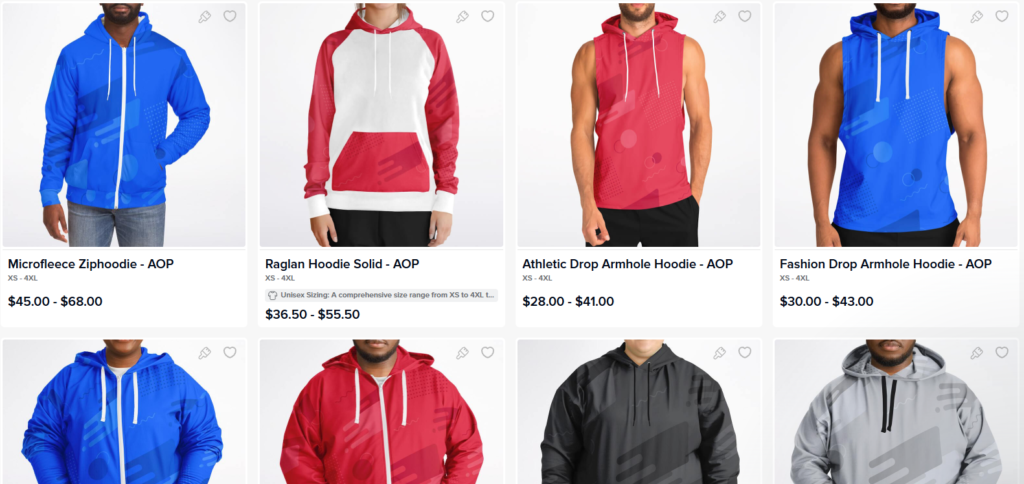
Standard printing is usually limited to a small rectangular box on the front or back of a shirt. If your brand relies on vibrant, edge-to-edge all-over prints (like yoga pants, AOP hoodies, or activewear), Subliminator far outperforms Printify’s AOP options. They achieve this true all-over print by using a “cut-and-sew” technique: the design is first printed across a flat piece of fabric, which is then precisely cut out and sewn together to create the garment.
While the company is headquartered in the US, production and fulfillment are handled by their AOP factory in China, which delivers incredibly vibrant dye-sublimation prints. One of Subliminator’s standout features is their transparent pricing—their listed product prices already include standard shipping, making it incredibly easy to calculate your profit margins.
Pricing: The basic plan is free to use. They also offer a Membership plan geared toward high-volume sellers for $30/month.
The main reason to choose it over Printify:
The problem with Printify: While they do offer AOP products, the selection is relatively limited, design placement is restricted, and the pricing is on the higher side.
Subliminator’s advantage: They are highly specialized in premium AOP cut-and-sew apparel. Their color accuracy and sewing craftsmanship are miles ahead of Printify’s standard AOP offerings. Plus, their all-inclusive, shipping-included pricing model completely eliminates the headache of trying to calculate complicated international shipping rates.
5. Gelato
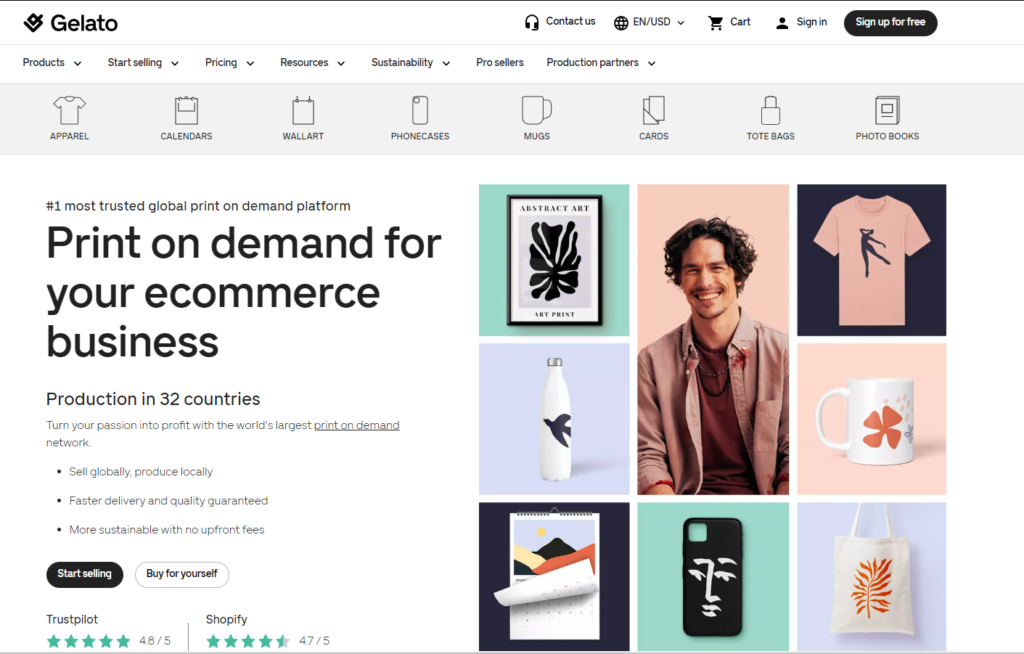
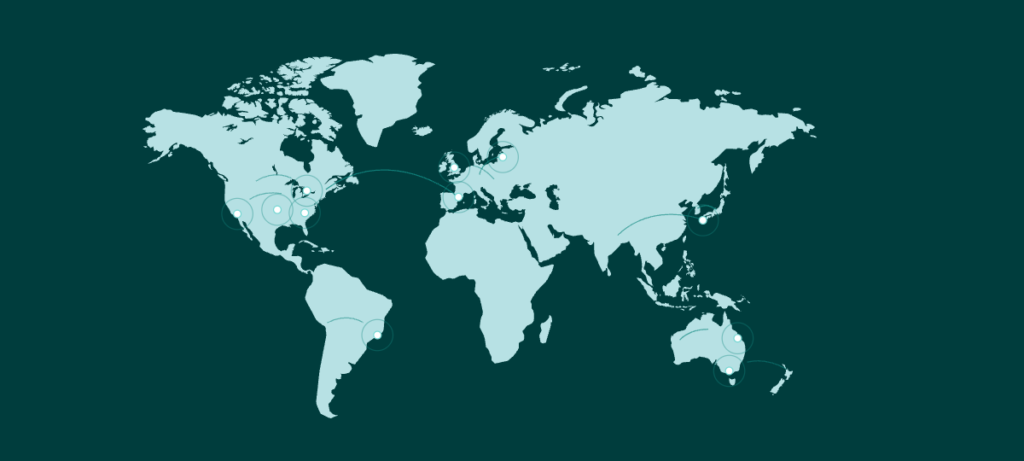
Running a global business on Printify can sometimes be a major headache, often bringing steep international shipping costs and endless customs delays. Gelato solves this by leveraging a network of over 130 local printing partners spread across 32 countries.
When a customer in Australia orders your t-shirt, Gelato automatically routes that order to a local print facility right there in Australia. This hyper-local production model drastically reduces carbon emissions, bypasses international customs duties, and ensures your customers get their items in a matter of days, rather than weeks.
Pricing: The basic plan is free. Gelato+ ($29.99/month) offers shipping discounts and access to premium mockup generators.
The main reason to choose it over Printify:
The problem with Printify: Fulfilling international orders often means dealing with painfully slow shipping times and expensive freight costs. On top of that, customers sometimes run into unexpected customs holds and surprise import duties.
Gelato’s advantage: They operate on a globally distributed, localized printing model. The system automatically assigns orders to the facility closest to the buyer (for example, an Australian order gets printed in Australia). This completely eliminates international customs fees and slashes global shipping times from two or three weeks down to just a few days.
6. Printful
Printful is Printify’s most direct competitor, though the two have now merged to become partners. However, their fulfillment model is completely different. While Printify outsources orders to various third-party print shops, Printful owns and operates its own fulfillment centers across North America, Europe, and Oceania. This means every single one of your orders undergoes strict, consistent quality control.
Printful consistently delivers some of the highest-quality DTG printing and embroidery in the industry. They also offer unmatched branding options, allowing you to add custom inside neck labels, package inserts, and branded packing slips.
Pricing: The basic plan is free to use. The Printful Growth plan is $24.99 per month.
The main reason to choose it over Printify:
The problem with Printify: Because they operate on a routing model where orders are handled by different third-party print shops around the world, the print quality and color accuracy for the exact same product can be inconsistent. Sending an order out can sometimes feel like a roll of the dice.
Printful’s advantage: According to their public information, all of Printful’s global fulfillment centers are 100% in-house, enforcing a unified, top-tier quality control standard across the board. If you’ve ever dealt with negative customer reviews due to Printify’s inconsistent quality, Printful is the ultimate solution for rock-solid reliability.
7. CustomCat
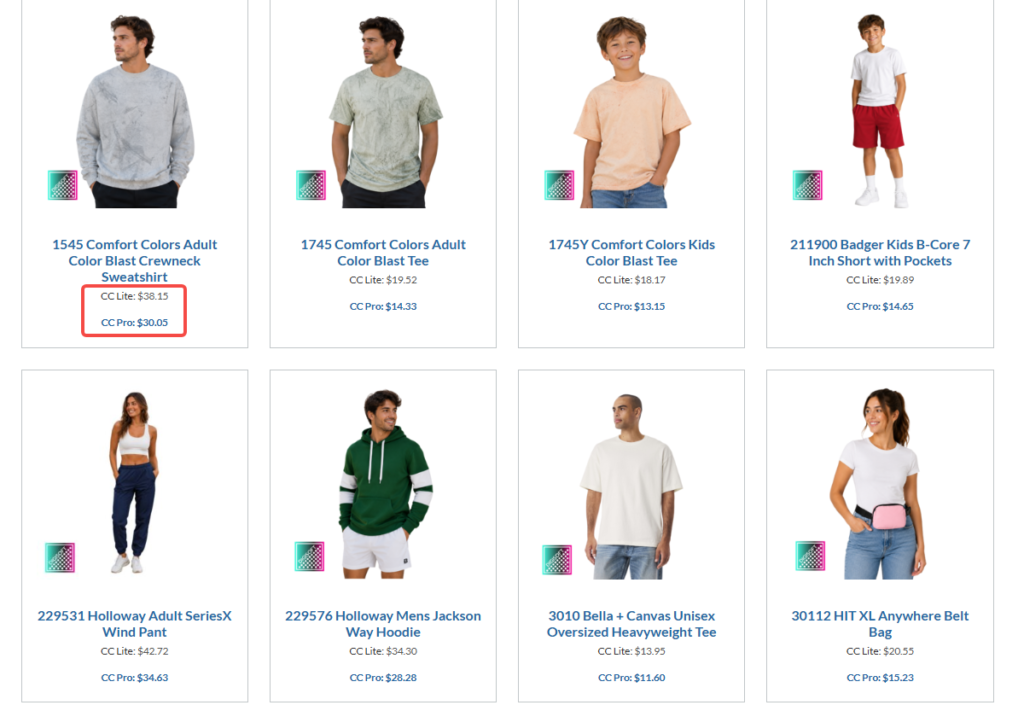
CustomCat is a well-established American company operating a massive manufacturing facility in Detroit. They recently overhauled their printing operations with a proprietary technology called DIGISOFT. This system produces incredibly durable prints that resist cracking and fading, even on notoriously difficult fabrics like polyester blends.
For high-volume stores, CustomCat is practically unbeatable. Their Pro plan ($30/month) drastically slashes base product prices (bringing a standard t-shirt under $10, for example), allowing seasoned sellers to maximize their ROI.
Pricing: A free plan is available. The Pro plan is $30/month and unlocks deeply discounted base prices (giving you 20-40% off).
The main reason to choose it over Printify:
The problem with Printify: For high-volume sellers moving hundreds of orders a day, Printify’s base costs and margins still eat into a significant chunk of your net profits.
CustomCat’s advantage: They are tailor-made for large-scale sellers. By subscribing to the $30/month Pro plan, you unlock some of the lowest base product costs in the entire industry. Combined with their proprietary, crack-resistant DIGISOFT technology, it’s the ultimate setup for maximizing your profit margins.
8. Contrado
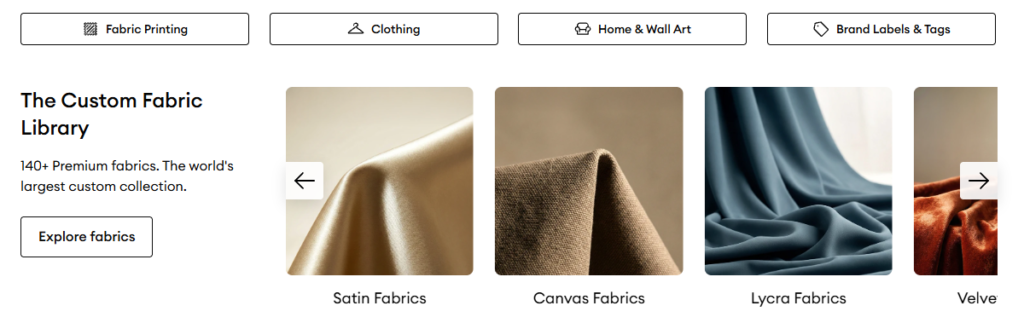
If you’re looking to build a high-end fashion brand, printing your designs on standard Gildan tees just won’t cut it. Contrado is a premium, UK-based POD service that specializes in luxury fabrics, genuine leather goods, and intricate cut-and-sew fashion pieces.
What makes this company stand out isn’t a massive roster of POD dropshippers, but rather its strong base of brick-and-mortar businesses and direct consumers.
They offer custom printing on over 140 different luxury fabrics, including silk, velvet, and knits. Every single item is handmade to order at their London facility under incredibly strict quality control.
Pricing: Free to use, but the base product costs are quite high.
The main reason to choose it over Printify:
The problem with Printify: Their materials are largely limited to mass-market cottons and basic blends, which simply can’t support a luxury or high-end brand positioning.Contrado’s advantage: They specialize in true high-end customization. Offering over 140 luxury materials (including vegan leather, pure silk, and velvet), every piece is hand-cut and sewn by artisans at their London headquarters. It is essentially the only alternative out there if you want to elevate a standard POD storefront into a genuine high-fashion brand.
9. Art of Where
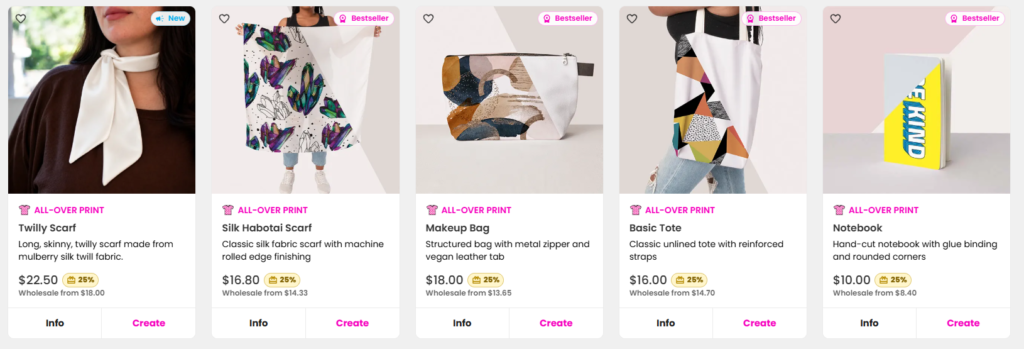
Art of Where is a boutique Canadian POD platform. They specialize in high-quality textile printing and offer unique items like custom notebooks, silk scarves, and specialty canvas tote bags.
For Canadian sellers, it’s a fantastic alternative to Printify because it completely eliminates the headache of cross-border shipping. For US sellers, their cross-border shipping is just as fast and reliable.
Pricing: Free to use.
The main reason to choose it over Printify:
The problem with Printify: Their network of high-quality print providers within Canada is relatively limited, which can occasionally lead to shipping delays for cross-border North American orders.
Art of Where’s advantage: As an artisan-tier POD platform based right in Canada, it completely removes the hurdles of cross-border shipping for Canadian sellers. Additionally, they offer highly unique, niche product categories like silk scarves and hardcover notebooks.
Final thoughts
Choosing the right print-on-demand backend ultimately comes down to your specific business model. If you want to dominate the highly profitable niche of custom footwear, JetPrint is in a league of its own; if you’re building an eco-friendly global brand, Gelato is the way to go. By ordering a sample or two to test out a few platforms for yourself, you’ll be ready to confidently take your store beyond the limits of the Printify ecosystem.
FAQ
Which Printify alternative offers the best profit margins?
If maximizing your profit margins is your top goal, JetPrint and CustomCat are the strongest contenders. JetPrint naturally offers low base costs without requiring a subscription, while CustomCat’s $30/month Pro plan unlocks some of the lowest apparel prices in the industry—perfect for high-volume sellers.
Which Printify alternative is best for international shipping?
To beat international shipping hurdles, Gelato is your best bet. Unlike platforms that ship globally from a single country, Gelato routes each order to a print provider in the customer’s own country (or the closest neighboring one). This bypasses customs delays and cuts global delivery times down to just a few days.
Do any Printify alternatives offer custom branding?
Yes. If a cohesive brand experience is a top priority for you, Apliiq leads the pack. They allow you to add custom woven neck labels, while JetPrint and Printful also offer a solid range of custom branding options for sellers.
Why shouldn't I just use Redbubble or Teespring?
Platforms like Redbubble, Zazzle, and Teespring are marketplaces. You upload your artwork to their sites, and they handle the rest—but they also keep the customer data and the lion’s share of the profits. In contrast, the alternatives listed above (like JetPrint and Printful) act as your fulfillment partners. They integrate directly with your own Shopify or Etsy store, giving you full control over your brand, ownership of your customer data, and the freedom to set your own profit margins.
0 Comments