In this guide, we’ll break down exactly how print on demand works, the most profitable product categories, and the printing techniques used by major suppliers. We’ll also walk you through the different POD business models available on the market today.
What is print on demand?
Print on Demand is an e-commerce fulfillment model. With this approach, you (the seller) don’t need to buy inventory upfront or invest in expensive printing equipment. You simply apply your original designs to blank products—such as apparel, accessories, or home goods—and sell them in your online store.
Only after a customer places an order and pays on your site do you pay your POD supplier (like JetPrint) for that item. Once you do, the supplier will produce the product, pack it up, and ship it directly to your customer.
This model completely eliminates the risk of holding unsold inventory, making it a true “sell first, create later” business. However, because everything is made to order, it naturally takes a bit longer for customers to receive their items compared to buying ready-made products.
How does print on demand work?
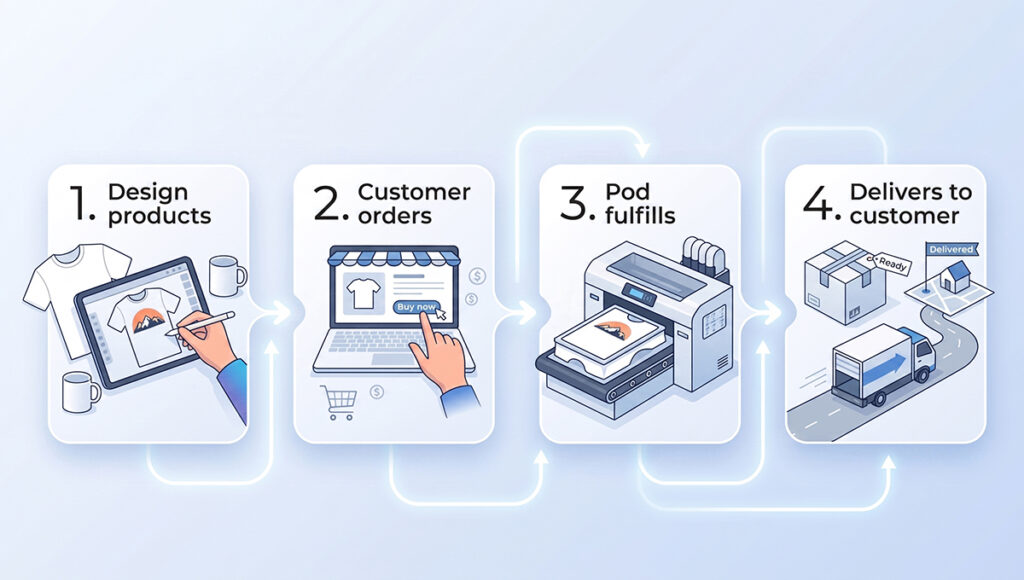
Starting a print-on-demand business is much easier than the traditional retail model. It usually comes down to four simple steps:
Choose a reliable POD partner: Look for a supplier that carries the products you want to sell. For example, if you want to focus on high-margin custom shoes or vegan leather bags, JetPrint offers a massive selection of over 700 items and integrates seamlessly with your ecommerce site.
Design and publish your products: Upload your artwork into your supplier’s mockup generator. Once you’ve adjusted the size and placement, you can sync the products to your online store with just one click.
Market and sell: Your main job is to drive traffic. Use social media, SEO, or paid ads to bring potential customers to your store and convert them into buyers.
Automate order fulfillment: When a customer places an order, the details automatically sync with your POD supplier. They handle the printing, quality control, packaging, and shipping directly to your customer’s door.
What are the types of print on demand?
There are three types of print on demand fulfillment in the market, all of which are collectively referred to as print on demand. There is no specific name to classify them, so here they are divided according to the characteristics of these three methods: print on demand marketplace, print on demand fulfillment service, and print on demand solution.
1. Print on demand marketplaces
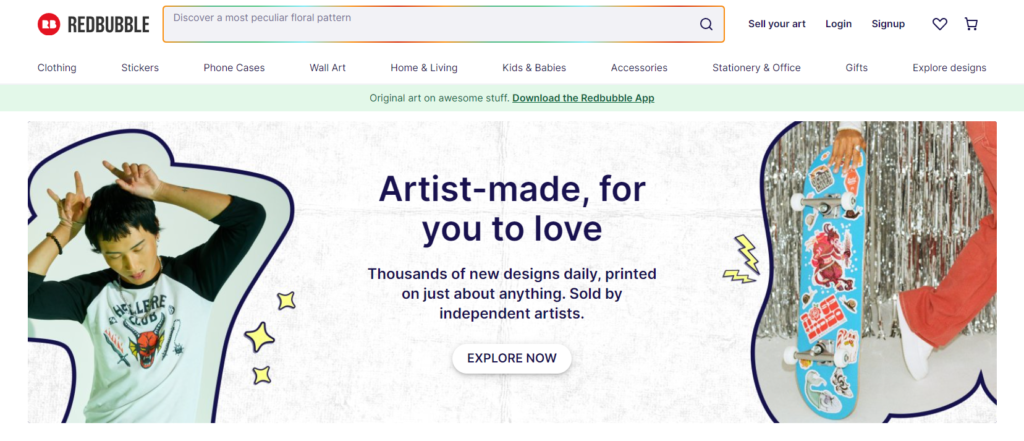
These platforms have built-in traffic. All you need to do is upload your designs; they handle the sales, printing, and shipping, while you earn a fixed commission.
Examples: Redbubble, Society6, Threadless
Best for: Pure artists and illustrators who don’t want to deal with customer service or building a website.
Cons: You can’t build your own independent brand or collect customer emails for remarketing.
Related article: Best Print on Demand Sites for Artists
2. Print on demand fulfillment services
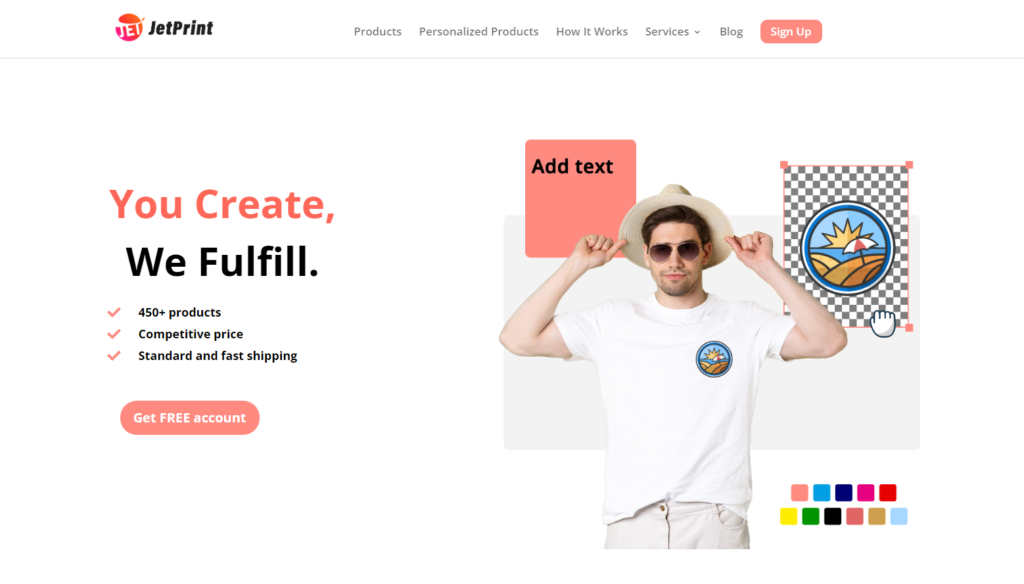
This is currently the most popular and highly recommended model. You build your own independent brand website (like a Shopify store) and connect it to a POD supplier via an app or integration.
Examples: JetPrint, Printful, Printify
Best for: Entrepreneurs who want to build a truly independent brand, own their customer data, and aim for higher profit margins.
3. Print on demand solutions (All-in-one)
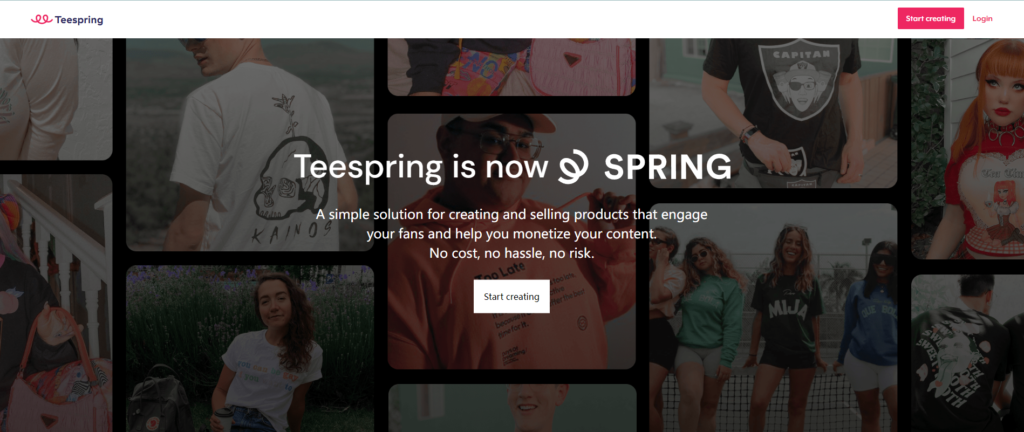
The supplier handles the printing and shipping while also providing you with a basic storefront link to sell from. However, these stores offer very little room for customization.
Example: Teespring
Best for: Influencers or YouTubers with an established fanbase who just need a simple link to sell merch. We’ve noticed that some individual sellers—who don’t fit into the influencer category—are opting for this route by using Printify Pop-Up or similar storefronts from other POD companies. I don’t believe this is a smart move. These types of stores can’t scale into a robust ecosystem like Shopify, and their built-in features are extremely limited.
Print on demand vs. Traditional dropshipping: What’s the difference?
While POD falls under the broader umbrella of dropshipping (since neither requires you to hold inventory), there is a fundamental difference in their business value:
| Points of comparison | Print on Demand | Traditional dropshipping |
| Product differentiation | Very high. Because your products feature exclusive designs, they’re completely unique in the market, making it much easier to build brand loyalty. | Very low. You’re selling the exact same products as hundreds or thousands of other sellers, making it incredibly easy to get dragged into a price war. |
| Profit margins | Profit margins are below average for basic items (like T-shirts) but highly lucrative for high-ticket items (like shoes). | It typically relies on high sales volume, and your profit margins are heavily squeezed by advertising costs. |
| Quality control | Reputable POD suppliers maintain strict quality control at their local or in-house facilities. | Suppliers are a mixed bag, making it extremely difficult to control product quality and shipping times. |
| Brand building | Highly suitable. It supports custom branding options like custom labels and personalized packaging inserts. | Quite difficult. It’s easy for customers to figure out that the products are coming from cheap, third-party factories. |
Which print-on-demand products are the most profitable?
Rather than just listing what’s trending, I’d rather show you which products actually drive the best profit margins. Take the profit comparison between T-shirts and vegan leather bags we discussed in our post on whether print-on-demand is still profitable: you would have to sell 11 standard T-shirts just to match the profit of a single vegan leather bag.
By differentiating your product catalog and designs, you can steer clear of highly saturated markets and secure much higher profit margins.
Footwear
Footwear is a high-ticket category in the POD space with incredible profit margins. JetPrint is one of the few suppliers in the industry offering high-quality custom sneakers, canvas shoes, and slides. With unique designs, you can easily clear $20 to $50+ in profit per pair. Designs featuring exclusive intellectual property yield the highest returns.
Vegan leather bags
These are some of the best items you can offer female consumers. They naturally cater to a female demographic, and traditionally, female sellers have the best intuitive understanding of this specific market. The two main players supplying the custom leather bag market right now are JetPrint and Artsadd.
T-Shirts and hoodies
Apparel is the bread and butter of POD. While the competition is fierce, you can still drive consistent sales if your designs resonate deeply with a specific niche (like dog owners, programmers, or fitness enthusiasts). However, this is also the category that kills off a lot of sellers who blindly churn out and scale designs without a clear strategy.
Embroidered products
Compared to standard flat printing, embroidery gives hats, jackets, and polo shirts a more premium, professional feel, making them perfect for corporate merch or high-end streetwear brands. This doesn’t guarantee that just any embroidered item will sell, but it does mean customers are willing to pay a premium for them—allowing you to bump up your profit margin by $3 or more per item. Currently, Printful and Apliiq offer some of the best embroidery quality in the business.
The most common printing technologies in the pod industry
Understanding how your products are actually printed can help you create better designs and cut down on returns and customer service issues:
DTG (Direct-to-garment): Ink is sprayed directly into the fibers of the fabric.
Pros: Great for colorful, highly detailed, photo-quality designs.
Cons: It performs best on dark, 100% cotton garments, but it isn’t well-suited for polyester.
UV printing: Uses ultraviolet light to instantly dry and cure special inks the moment they hit the product’s surface.
Pros: Highly versatile and works on almost any hard material (like phone cases, acrylics, and tumblers). The results are vibrant, waterproof, and scratch-resistant.
Cons: Not meant for soft fabrics or apparel that needs to be frequently folded or stretched, as the print is prone to cracking.
Sublimation: High heat turns the ink into a gas, allowing it to permeate the material itself. This is the core technology behind all-over print (AOP) clothing, mugs, and custom canvas shoes. The design becomes one with the product, meaning it will never fade or crack.
Embroidery: Embroidery machines stitch the design directly onto the fabric. Since it relies on colored threads, your designs need to be kept as clean and simple as possible. It’s best to limit your color palette and avoid heavy gradients.
Conclusion
If you’ve found this article, it means you’re already exploring the print-on-demand industry. If you’re looking to break into this market—whether you’re a creator wanting to monetize your art or an e-commerce enthusiast looking for a low-risk startup opportunity—Print on Demand is the perfect starting point. It allows you to test the waters with minimal cost and build a global brand. However, if you truly want to succeed and turn a profit in this space, you’ll need to learn more about the ins and outs of e-commerce.
FAQ
Can I use print-on-demand services if I don't have an online store?
Absolutely. Many brick-and-mortar retailers and event organizers regularly buy products from print on demand companies.
Is print on demand profitable?
Yes,
There’s never a perfect time to enter the print-on-demand business. Entering later doesn’t mean you’ll lag behind others. If you concentrate on your designs, you can still make money.
Related article: Is print on demand profitable
0 Comments