How to Start a Profitable Dropshipping Business: The Ultimate 7-Step Framework

Dropshipping has definitely lowered the barrier to entry for e-commerce. You can sell products globally without ever holding inventory or dealing with packing and shipping. However, with the market as competitive as it is today, the days of just throwing together a website, uploading dozens of products, and making easy money while you sleep are long gone.
If you want to survive and actually turn a profit in this saturated market, it all comes down to data analysis, compliant operations, supply chain management, and highly targeted customer acquisition. Below, I’m going to share a practical, step-by-step 7-part framework to help you build a dropshipping business that’s sustainable and profitable in the long run—not just a quick cash grab that dies out.
Contents 10 sections
The core logic and reality of dropshipping
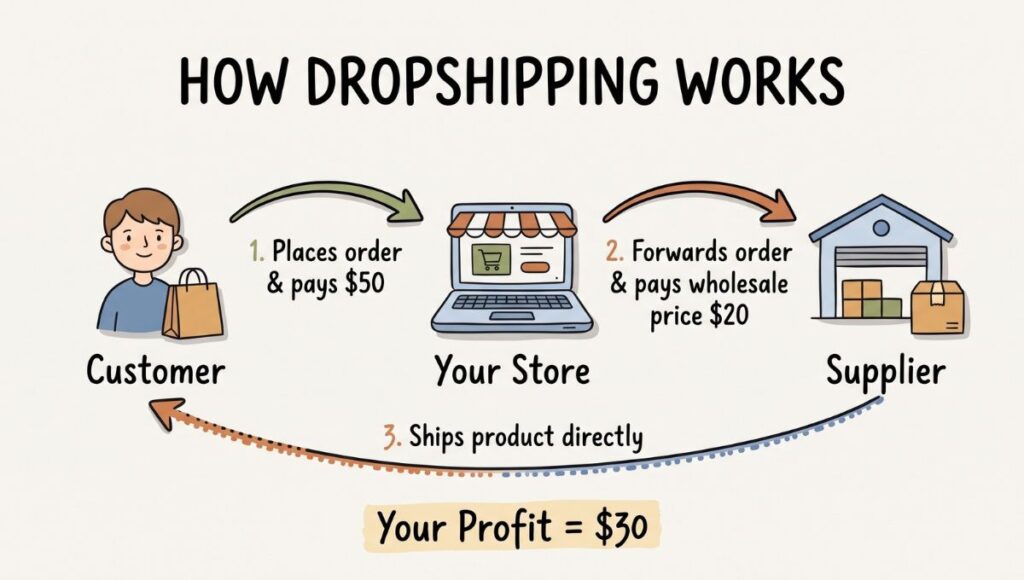
Before diving in, let’s get clear on how dropshipping actually makes money. In short: you sell products on your own website at a retail price. When a customer places an order and pays, you pass the order details to your supplier and pay them the wholesale price. The supplier then packs and ships the product directly to your customer. Your profit is simply the difference between the retail price and the wholesale cost plus shipping.
Realistic expectations (avoiding the pitfalls):
Don’t expect to get rich quick: You’re going to have to sink a lot of time into constantly testing products and optimizing ads. The early stages are a real grind.
Profit margins aren’t that high: Hitting a 10% to 20% margin is actually pretty good. Since you aren’t taking on the risks of holding inventory or handling logistics, you’re naturally giving up a cut of the profits to the supplier.
Customer service can be a nightmare: If your supplier ships late or the product quality is garbage, the customer is going to take it out on you and demand a refund. If you rack up too many customer complaints, you risk getting your store suspended or shut down entirely.
Step 1: Set a realistic startup budget
A lot of beginners fail right out of the gate because they buy into the myth that dropshipping is entirely “zero cost.” While you don’t have to buy inventory upfront, building a professional online asset still takes a baseline investment. Here is a realistic breakdown for your starting budget:
| Expense | Estimated cost | Details |
| E-commerce platform | $29 – $39 / month | Shopify or WooCommerce (includes basic hosting) |
| Custom domain | $10 – $18 / year | You need a .com domain to build brand trust |
| Test orders | $50 – $100 | Order the product yourself to verify supplier quality and shipping times |
| Initial ad spend | $1,000 – $1,500 / week | For initial testing and running ads on TikTok or Facebook |
| Essential apps/tools | $30 – $50 / month | Email marketing, review importers, or SEO optimization apps |
| Recommended minimum capital | $1,120 – $1,700 | Keep at least this amount in cash flow to cover initial turnover |
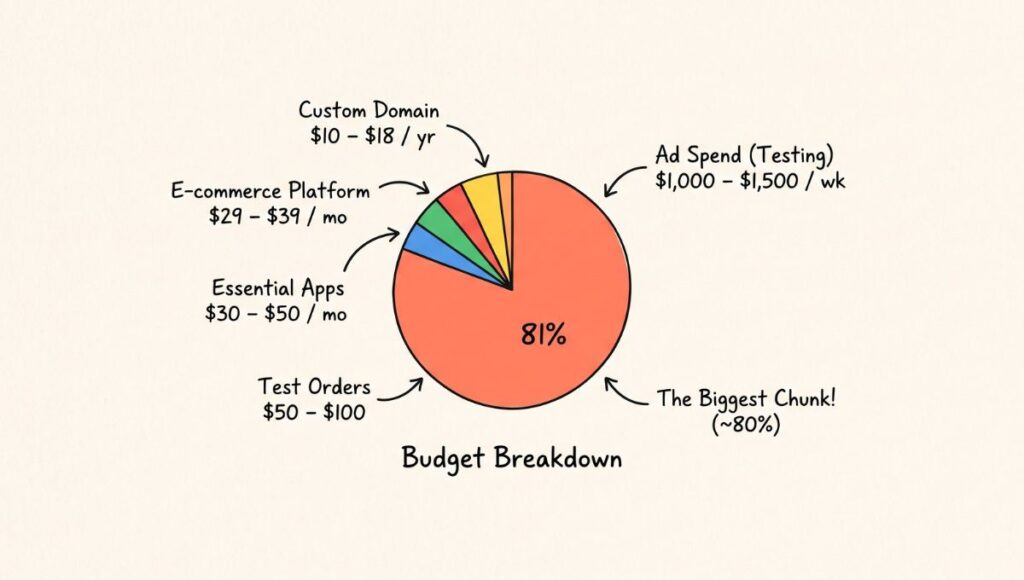
Let me explain why the ad spend I listed here is much higher than what you might see from other articles or influencers. I’m basing this on Meta’s standard best practices. This is a one-week budget designed to get you to 50 conversions, which gives Meta’s algorithm enough data to fully learn and optimize. Assuming your product and ad creatives are solid, this budget should be enough for you. However, if your ads run for a full week and only pull in a handful of conversions, you’re going to need to keep investing to test further.
Step 2: Use data to find a high-profit niche
Long-time readers know I say this all the time: never touch generic, mass-market products that everyone else is selling. You have to laser-focus on a specific target audience. Let me reiterate this one more time: the core of e-commerce is really just solving specific pain points for a small group of people.
So, how exactly do you use data for product research?
First up is Google Trends. Plug your keyword in and pull up the search graph for the past 5 years. Stay away from flash-in-the-pan fads or highly seasonal trends. What we’re looking for are categories that are stable and steadily trending upward.
Next, run your target keywords through SEMrush or Ahrefs. Don’t try to compete for massive, broad terms. Keep your eyes peeled for “blue ocean” keywords with a monthly search volume between 1,000 and 10,000, along with a low keyword difficulty.
As for how to drill down into a niche, let’s use shoes as an example:
If you see massive traffic for the word “shoes” during your research, don’t get carried away and open a generic “shoe store.” You need to peel the layers back. For instance, narrow it down from “shoes” to “sneakers,” and then drill down even further to “walking shoes for seniors with plantar fasciitis.” Remember, the deeper you dive into a niche and the more precise your positioning, the higher your customer loyalty and conversion rates will typically be.
Step 3: Tearing down your competitors
Knowing who your competitors are isn’t enough; you have to expose their playbook. Do a quick Google search for your product keywords, find the top 10 independent stores ranking for them, and dig in using these three angles:
First, look at their traffic playbook. Jump right into SimilarWeb to check out their main traffic sources. If 80% of their traffic is pouring in from Pinterest, it tells you this product is highly visual—which means you absolutely need to focus your heavy firepower on Pinterest marketing, too.
Next, spy on their ad creatives. Head over to the Facebook Ads Library or the TikTok Creative Center and search for their brand name. See what kinds of videos they’re currently running. Study their 3-second hooks and ad copy, and pay special attention to the ads that have been running the longest—those are usually their biggest moneymakers.
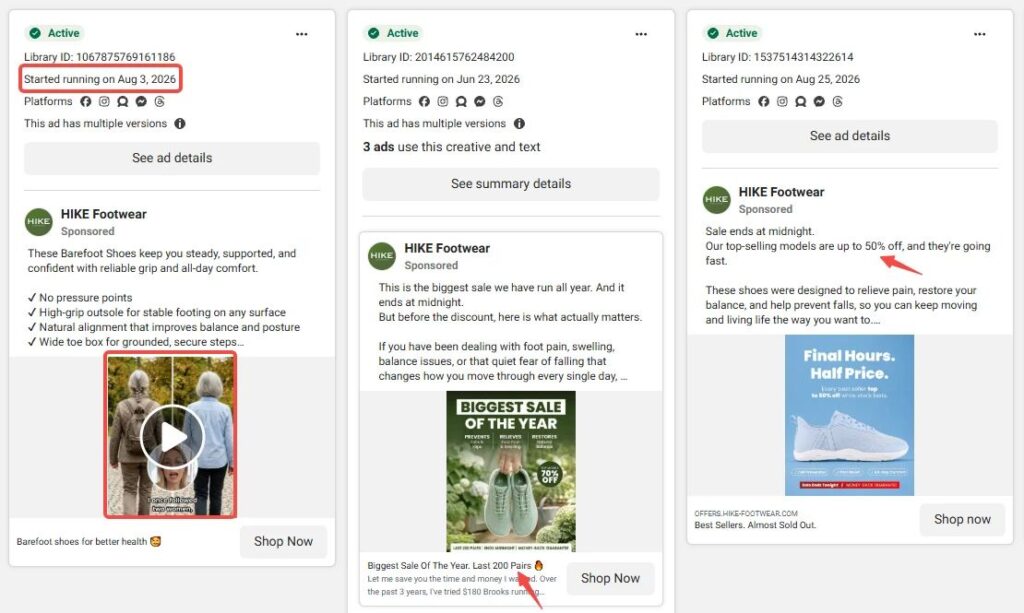
Keep one thing in mind, though: you’re not looking at these just to rip them off. You need to figure out what specific customer problems their ads are actually solving. Put yourself in the buyer’s shoes—what exactly about the ad would win you over?
Finally, check their real social media engagement. Don’t let vanity follower counts fool you; you have to look at the ratio of likes to comments. If an account has 100,000 followers but only gets 5 likes per post, they’ve either bought fake followers or their content is just plain boring. This is where you can easily crush them simply by posting content that’s more interactive or by sharing behind-the-scenes stories. Also, keep a close eye on the comment sections under their social posts, especially the negative reviews. The things they are dropping the ball on are exactly the gaps you need to aggressively capitalize on.
Step 4: Select reliable, high-quality suppliers
Remember, your supplier is essentially your business partner. If they have slow shipping and crappy product quality, you’re going to get hit with a mountain of customer complaints. Ultimately, this can get your payment gateways banned—which is an absolute death sentence for your business.
So when scouting for suppliers, there are a few hard metrics you absolutely cannot compromise on:
First is their blind dropshipping capability. You must confirm with them point-blank that they will absolutely not stuff their own invoices or promotional flyers into your customers’ packages.
Second is fulfillment speed. You need a rock-solid commitment from them: orders must be processed within 24 to 48 hours, and shipping times to major US and European markets should ideally be locked in at 7 to 10 days max.
When it comes to sourcing channels, traditional platforms like AliExpress or Megagoods are great for digging up novel, quirky products, but you have to keep a very close eye on their shipping times. If you want to build an original brand without the risk of holding inventory, Print-on-demand is a fantastic route to take—think JetPrint, Printful, or Printify. You can just slap your own designs on apparel, wall art, or shoes; every time a customer places an order, they produce and ship it out for you. This allows you to effortlessly launch a unique, branded product line without ever stocking a single item.
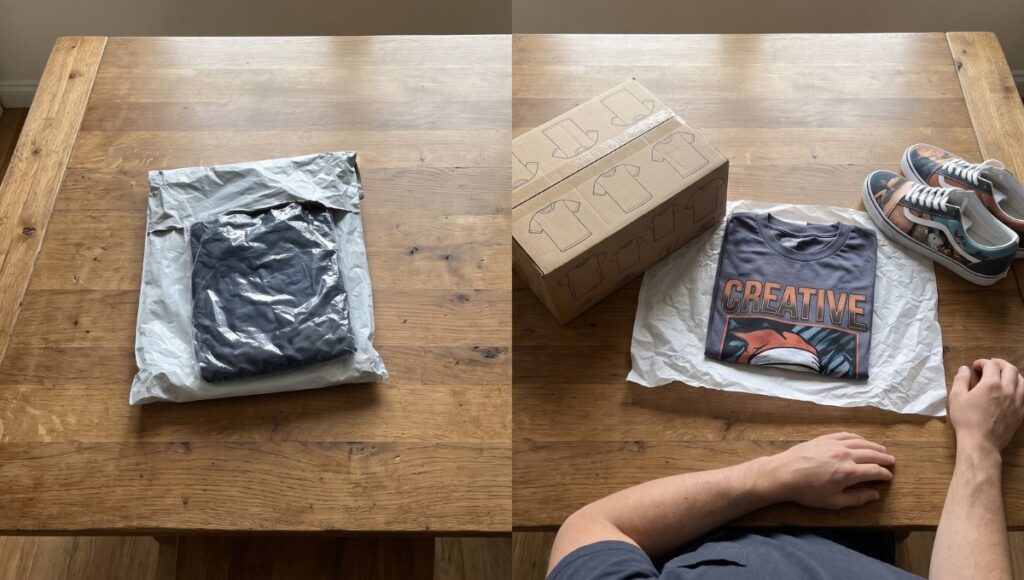
Finally, here’s a pro tip to save you a lot of headaches: before you officially partner up and dump a ton of money into ads, make sure you go undercover as a customer and place one or two test orders yourself. You don’t just want to start the clock and see exactly how many days it takes from checkout to delivery; you also need to physically unbox it yourself to see if the packaging and product quality actually make the cut.
Step 5: Legal and tax basics
(Quick disclaimer first: specific laws and regulations vary by country and region, so I’m just going to walk you through the most universal, underlying business logic here.)
First up is registering a business entity. In the early stages when you’re just testing the waters, you can totally run your dropshipping business as an individual (sole proprietor). But once you’ve proven the model and start seeing consistent sales, I highly recommend registering a formal business entity (like an LLC) as soon as possible. This completely separates your personal assets from your business liabilities—essentially acting as a safety net for yourself.
Next, you’ve got to sort out your Tax ID number (like an EIN). Once you scale up and want to apply for a professional Stripe business account, or you’re trying to score premium products from high-tier suppliers, they’re almost always going to ask for your tax ID. There’s really no getting around this step.
Finally, whatever you do, don’t forget about sales tax. If you’re selling to customers in states or countries where you’ve established an “Economic Nexus,” you are legally obligated to collect and remit sales tax for that jurisdiction. Even though Shopify has built-in tax calculation features in its backend, this ultimately boils down to legal compliance. I highly recommend spending a little money to consult a solid, professional CPA so you know exactly where you stand.
Step 6: Building a high-converting site
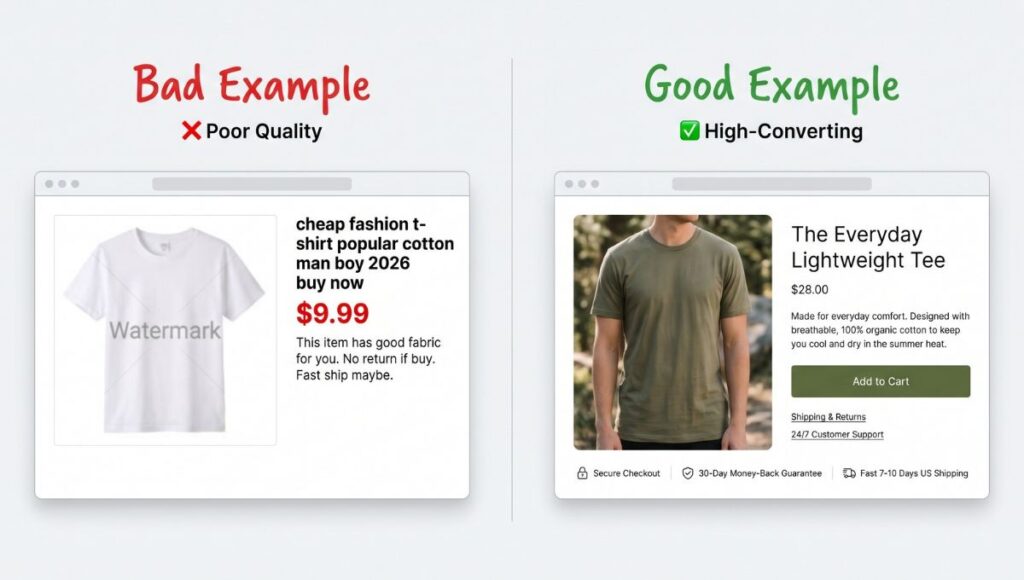
Don’t even think about being lazy and just one-click importing products directly from your supplier. Customers can spot that glaring, cheap vibe from a mile away. You really need to give your storefront a proper, premium facelift.
First, nail down your platform and domain.
For building your site, Shopify is an absolute no-brainer, though WooCommerce works too. You absolutely must buy a .com domain that perfectly matches your brand name’s spelling. Plus, the overall visual vibe of your store has to make sense: if you’re selling fashion, go for a modern, chic look; if you’re selling tech gadgets, aim for that minimalist, high-tech aesthetic.
Second, get your “Trust Pages” dialed in.
A lot of beginners skip these pages, and it instantly drives customers away the second they click into the site:
About us: Tell a compelling brand story. Even if you’re secretly just running a dropshipping operation behind the scenes, front-facing, you still need to give your store a core set of values.
Shipping & returns: Don’t try to hide or obscure your shipping times. If it’s going to take 10 days to arrive, just be upfront and put down “7-12 business days.” An honest, transparent policy will always win you more goodwill than a fake promise.
Contact us: Make sure you set up a professional business email (like [email protected]). Don’t try to scrape by with a random Gmail or Yahoo address—it just looks incredibly tacky.
Third, hook up your payment gateways.
You have to integrate PayPal along with major credit card processors (I highly recommend Stripe or Apple Pay). The checkout process needs to be buttery smooth, and ideally, your site should automatically display localized currency based on where the customer is browsing from.
Fourth, rewrite your copy and do a complete visual overhaul.
Absolutely, under no circumstances should you rip those watermarked, trashy photos and broken English descriptions straight off AliExpress or other suppliers. You can shoot your own photos or use AI tools to generate clean, high-end lifestyle images. A quick heads-up, though: AI-generated images can sometimes have obvious glitches and look unnatural. You’ll need to put in some extra elbow grease to touch them up or regenerate them until there are zero flaws that a buyer could spot.
Also, when writing your product descriptions, flip those dry “feature statements” (like: “This shirt is 100% cotton”) into hard-hitting “value propositions” that solve a pain point (like: “This shirt will keep you completely dry and fresh all day long in 90-degree summer heat”).
Step 7: Driving omni-channel traffic and nailing your SEO strategy
In e-commerce, traffic is your absolute lifeblood. You need to hit them with a combo of short, medium, and long-term strategies:
The short game: Paid ads (rapid product validation):
Running TikTok Ads or Facebook Ads is the absolute go-to playbook right now. You want to churn out 15 to 30-second video creatives that feel super native and directly show how your product solves a pain point. Leverage the ad platform’s audience targeting to quickly filter out your first batch of paying customers and validate your conversion rate. Just a fair warning, though: 90% of newbies die right at this stage.
The mid game: Organic social media traffic (building the foundation):
Hurry up and set up your official brand accounts on Instagram, TikTok, and Pinterest. Post a ton of product tutorials and real customer unboxing videos. You absolutely have to stay active—you need to prove to your customers that this is a store with a human touch, run by actual living, breathing people. And don’t forget to drop your store link in your bio. Not only does this drive traffic, but it also helps Google’s crawlers index your site much faster.
The long game: Google seo (building passive traffic):
A lot of e-commerce folks are impatient and think Google SEO is too slow and virtually useless—that is a massive mistake. The keywords you pick must be exactly what your target audience is searching for. Then, you write high-quality blog posts around those long-tail keywords (for example: “Top 5 Chew Toys for Labrador Retrievers in 2027”). People who search for articles like that have incredibly high buyer intent. Naturally sliding your product links into those posts will help bring in a steady, endless stream of passive orders.
Also, on a day-to-day basis, you absolutely must optimize your site’s loading speed and mobile responsiveness. And whatever you do, don’t forget your image Alt tags. A long-term SEO foundation is what will ultimately drive your customer acquisition cost down to almost nothing later on.
One final heads-up:
Don’t just run around like a chicken with its head cut off, skipping keyword research entirely and having AI bulk-generate a bunch of useless, fluffy blog posts. That kind of garbage content won’t bring in a single drop of traffic. Worse yet, it could get your site flagged as spam by Google and completely blacklisted.
Final thoughts
At the end of the day, making money with dropshipping is way past the “slap a generic Shopify theme together, upload a few viral products, and make money in your sleep” phase. You have to outsmart the competition—grind through the data, be ruthless when vetting suppliers, and actually focus on solving real customer pain points.
The 7-step framework I broke down above is designed to help you avoid building a fragile, fly-by-night store and instead build a business that can survive in the long run. When you actually get to work, burning money on dead ads and arguing with suppliers is just part of the game; the early stages are guaranteed to be an absolute grind. If your ultimate goal is to build a defensible brand, traditional dropshipping should just be your stepping stone, not your end goal.
Since you’re ready to get started, you might want to check out JetPrint. Print-on-demand is essentially a form of dropshipping, but because you can create your own original designs and actually differentiate your products, the conversion rates are usually much better than just flipping generic goods.
Ready to build your brand with JetPrint?
FAQ
Is it too late to get into dropshipping? Is the market too saturated?
The lazy “upload everything and see what sticks” model is definitely dead. But there’s always room for branded, highly curated dropshipping. As long as your product selection is sharper, your copy hits harder, your traffic strategy is dialed in, and you back it up with solid customer service, there is absolutely still profit to be made.
Related article: Is Dropshipping Worth It?
What happens if a customer demands a refund, but the supplier refuses to take the return?
Honestly, you just have to accept this as the cost of doing business in dropshipping. If it’s a cheap item, the smartest move is to issue a full refund and let them keep the product. Consider it paying for peace of mind to avoid bad reviews—plus, international return shipping usually costs more anyway. Just factor this expense into your regular operating costs. However, if you’re selling high-ticket items, you need an ironclad “Return & Refund Policy” on your site from day one so you don’t leave any loopholes for scammers looking for a freebie.
Can I use Amazon as my sales platform for dropshipping?
Amazon’s official rules do allow it, but the conditions are incredibly strict: you must be the seller of record on all packaging (zero trace of your supplier allowed), and you are entirely on the hook for processing all returns. Honestly, with Amazon’s brutal shipping time requirements, relying on a traditional dropshipping supplier is basically a slow death sentence for your account. If you really want to do this, stick to running your own independent store, or partner with reliable local warehouses and the POD services mentioned earlier.

Submit a Comment