
The answer is yes, you still can, but it is definitely not a get-rich-quick scheme.
What is print on demand?
Print on Demand (POD) is a new business model that allows you to create and sell your own designs on items such as t-shirts, mugs, shoes, jewelry and more. You don’t have to buy inventory up front with POD. When a customer places an order, the product is printed and shipped to the customer directly. This means you won’t have to worry about stockpiling, shipping products, or dealing with returns. This model enables entrepreneurs to create customized products and designs without a large financial investment, making it ideal for small businesses and individuals looking to start a side business.
The beauty of print-on-demand is that it enables people to design and sell their own custom products without the need for a physical storefront. Entrepreneurs can easily set up an online store and start selling their products to customers all over the world thanks to the rise of eCommerce platforms like Shopify, WooCommerce, and Etsy.
Can you actually make money with print on demand?
If you lurk in various e-commerce communities, you’ll quickly notice a massive divide in what sellers are actually bringing in.
A lot of beginners fail because they buy into the myth that simply uploading a design will automatically generate cash. However, successful veteran sellers will tell you the hard truth: POD profit margins are typically pretty thin (often netting just $3 to $10 per item).
So, if you really want to crack the code on how to make money with print on demand, you have to understand that it’s fundamentally a game of conversion rates and volume. Only by zeroing in on a highly targeted niche, running your store consistently, and letting those small profits compound can you build a substantial stream of passive income.
How start a print on demand business?
It is relatively simple to start a print on demand business. You can take the following steps:
1. Choose your product or niche
The first step in launching a print on demand business is deciding what products to sell. However, product selection must adhere to two principles:
- Choose items that are in high demand.
- Choose products with a high profit margin and a high gross profit.
- Focus on a specific niche
There’s no shortage of items you can sell—t-shirts, hoodies, mugs, shoes, bags, and other merch. According to Google Ads’ free keyword tools, these products currently have massive search volume, which means a ton of sellers are already competing for them.
However, you need to pick products that carry a higher perceived value and trigger emotional purchases, such as footwear and leather bags.
Keep in mind that broad markets like “funny t-shirts” or “cute pets” are completely saturated. You need to niche down and find a hyper-specific audience that is deeply passionate and has strong purchasing power.
The Wrong Approach: Selling a generic “I love coffee” mug.
The Right Approach: Selling a coffee mug specifically designed for “ER nurses working the night shift.”
I’ve actually been following Afroyla, a leather bag brand that focuses on Black women’s culture, and they capitalized on this strategy perfectly.
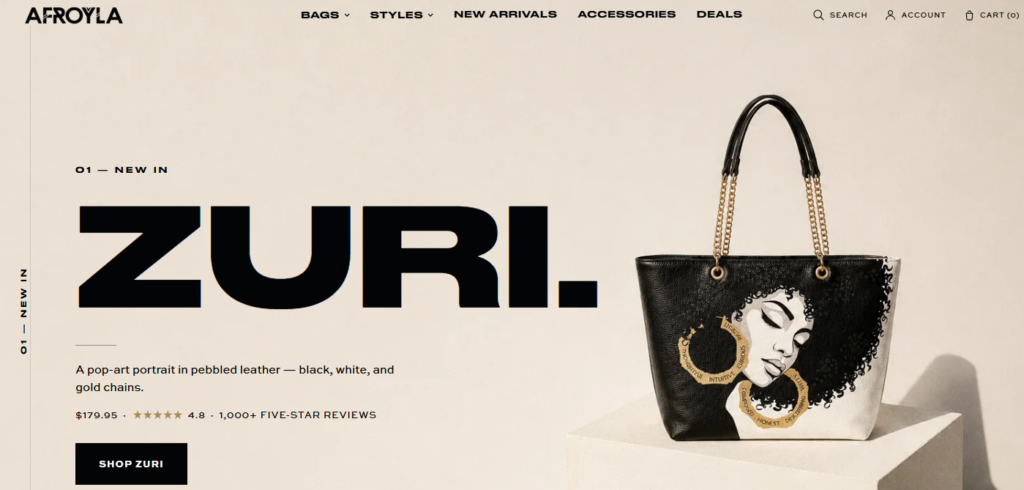
Ultimately, the more specific your target audience is, the easier it is to create an emotional connection with your customers—which is exactly what drives impulse purchases.
2. Choosing a Supplier
Most of the time, you’ll choose a supplier based on the specific product. Since different companies specialize in different items, it’s incredibly hard to find a single supplier on the market that perfectly meets all your product requirements.
When vetting suppliers, we highly recommend ordering a sample to check the quality firsthand—this is truly the most effective way to evaluate them. You might notice that a few customers have left negative reviews for one of a company’s other products. However, if you haven’t found any bad reviews for the specific item you are interested in, ordering a sample is definitely your best bet.
3. Create designs that stand out
After you’ve decided on a product to sell, the next step is to design it. You have the option of designing the product yourself or hiring a designer to do it for you. Consider your target audience and the types of designs they will be interested in when designing your product. Designs can be trendy, humorous, inspirational, or anything in between.
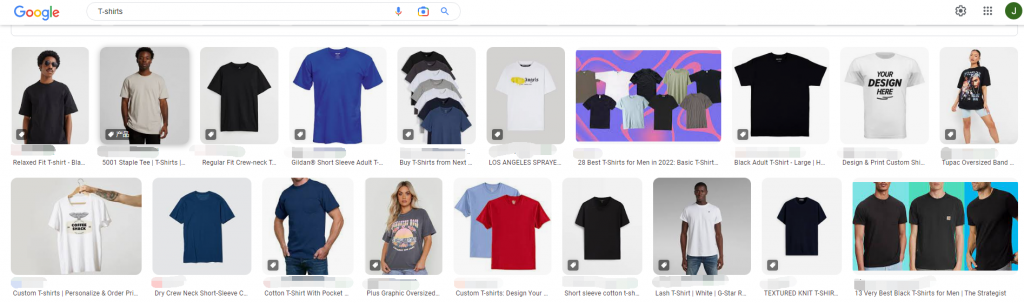
A Google search will help you find your product. For example, if your product is a T-shirt, you can use the keyword “T-shirt” to search on Google, and then open Google Images to view the top-ranked pictures, which are mostly in a simple style. This is challenging for you.
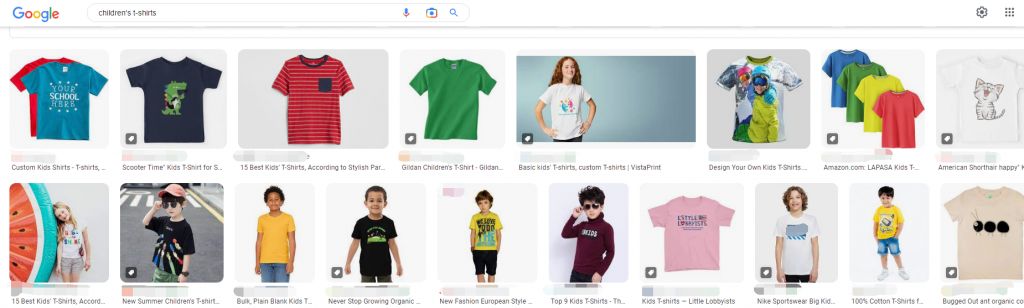
If your target audience is children, you can look for “children’s t-shirts,” which are very cool and suitable for a simple style or some cartoon animals, and you can design your products around these two directions.
Of course, the above are businesses that take into account your design abilities; however, if you are not an artist, there are numerous tools that can assist you in creating stunning designs without any artistic talent!
Here are some popular tools:
Canva (http://www.canva.com/) – A design tool. Using their pre-made templates and your own text or images, you can create graphics that appear to cost thousands of dollars. It’s simple to use and provides numerous options for creating various types of designs such as posters, banners, book covers, and more!
Adobe Illustrator (https://www.adobe.com/products/illustrator/) – A drawing program. Users can use this tool to create vector images that can be enlarged without losing quality (or pixelation). It also includes powerful drawing tools, allowing even those with no design experience to create professional-looking compositions.
Related article: How to Create Print-on-Demand Designs When You’re a Beginner
4. Price your products
A lot of new sellers try to compete by slashing their prices to the bone, only to realize they’re actually in the red after factoring in platform fees, production costs, and ad spend.
Customers aren’t just buying a leather bag; they’re buying into the attitude and lifestyle it represents. High-quality mockups and a compelling brand story can massively boost your product’s perceived value, giving you the confidence to charge a premium.
Baking the shipping costs directly into the product’s sticker price and advertising “Free Worldwide Shipping” can dramatically drop your cart abandonment rate.
5. Choose your sales channels
If you have a product ready to go, there are a ton of ways to sell it. Here is a breakdown of the most common approaches:
Built-in Traffic Platforms (e.g., Etsy, Amazon Merch):
These platforms come with a massive amount of organic traffic built right in, making them great for beginners just starting out. The catch? The competition is fierce, the platform fees take a big cut of your profits, and you don’t actually own your customer data.
Self-Hosted Platforms (e.g., Shopify, WooCommerce):
Here, you have total control. You can build genuine brand equity and enjoy much higher profit margins. The hard part is that you have to drive 100% of your own traffic from scratch—which means relying heavily on ads, SEO, and social media.
Tip:
Start by leveraging the organic traffic on the big platforms to test out your designs. Once you find your winning products (your bestsellers), migrate those proven designs over to your own standalone website to scale up and build out your actual brand.
6. Market your POD products
Promoting your print-on-demand products is a critical component of running a successful business. There are numerous methods for promoting your print on demand products. Social media is the first and most obvious. Social media is an excellent way to give your business free exposure while also building a loyal following of people who are interested in what you have to say and will buy from you as a result.
Here are some ways to promote your products:
Social media is an effective way to promote your print-on-demand products. You can showcase your designs on platforms like Instagram, Facebook, and TikTok to reach a larger audience. To build a loyal fan base, use hashtags and engage with your followers.
2. Marketing Through Influencers
Collaboration with an influencer is an excellent way to reach new audiences. In exchange for promoting your product on their social media channels, you can offer them a free product or a commission on sales.
3. Email Promotion
Email marketing is an excellent way to keep your customers interested and up to date on your latest designs and promotions. You can collect email addresses from your visitors via your website or social media channels and send out regular newsletters to your subscribers. You can also use email marketing campaigns to directly contact potential customers with information about new products or upcoming sales.
4. Paid Promotion
Paid advertising, such as Google Ads or Facebook Ads, can be an effective way to increase traffic and sales to your website. It is, however, critical to track your ROI and adjust your campaigns accordingly.
Tips for running a print on demand store from home
1. Overpriced goods
While profits are important, overpricing a product can turn away potential customers. Make sure to research your competitors’ pricing and set your own.
2. Appealing website
Make an appealing website that is simple for customers to use, and make sure to clearly list all of the information on each product so that customers know what they’re getting into (such as shipping costs) before purchasing something from you.
3. Ignoring marketing
Marketing is essential for establishing a profitable print on demand business. Neglecting marketing can result in low sales and brand awareness. Make time and resources available to promote your product.
4. Copyright Violation
Using copyrighted material without permission can result in legal issues as well as brand damage. Make sure to use original designs or licensed materials.
5. Don’t give up too soon
A lot of sellers throw in the towel after uploading just 20 designs without making a single sale. In reality, successful sellers usually have hundreds, if not thousands, of high-quality SKUs. Building a successful store is a process that takes time and patience.
6. Customer service matters
Even if your supplier handles the shipping and fulfillment, after-sales support is still entirely your responsibility. Promptly replying to emails and proactively handling shipping delays or refunds for defective products will help you earn valuable positive reviews, which ultimately boosts your store’s ranking.
0 Comments