Recent data shows the global dropshipping market is on track to surpass $583 billion this year. At the same time, however, customer acquisition costs have hit record highs, according to reports from Meta and Google. Today’s consumers simply no longer trust generic storefronts that look cheap and offer zero unboxing experience.
The solution? Branded dropshipping.
By combining the low-risk, zero-inventory model of dropshipping with the premium pricing power of a brand, you can build a loyal customer base, dramatically boost your profit margins, and create a sustainable, long-term business.
In this comprehensive guide, we will break down exactly how to launch a branded dropshipping business from scratch, backed by real-world profit models and business case studies.
What is branded dropshipping?
Branded dropshipping is an e-commerce fulfillment model where you sell customized products featuring your own logo, custom packaging, and private labels—while still never having to hold any inventory.
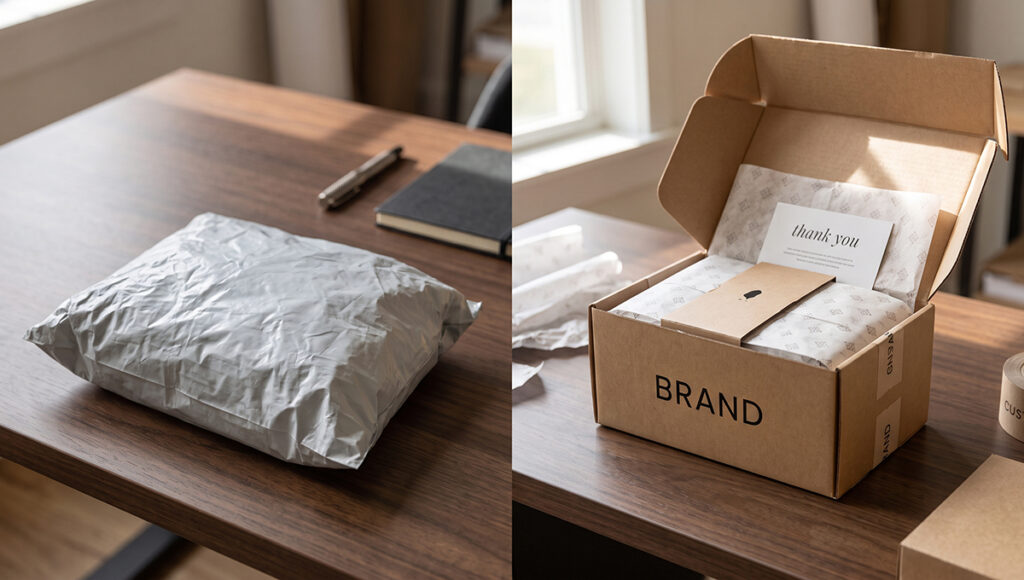
Instead of stuffing a generic item into a blank poly mailer, your supplier customizes the product and packaging to your exact specifications before shipping it directly to your customer. To the buyer, the package looks exactly like it came straight from a premium, established retail brand.
Traditional dropshipping vs. Branded dropshipping
To understand why top sellers are pivoting, let’s look at the numbers and mechanics:
| Feature | Traditional dropshipping | Branded dropshipping |
| Product uniqueness | Zero (Selling identical items) | High (Custom designs & labels) |
| Pricing power | Low (Price wars with competitors) | High (Brand premium allows higher prices) |
| Profit margins | 5% – 20% | 30% – 50% |
| Customer retention | Very Low (One-time buyers) | High (Brand recognition builds loyalty) |
| Unboxing experience | Poor (Generic plastic bags) | Premium (Custom boxes, insert cards, hangtags) |
Why branding wins?
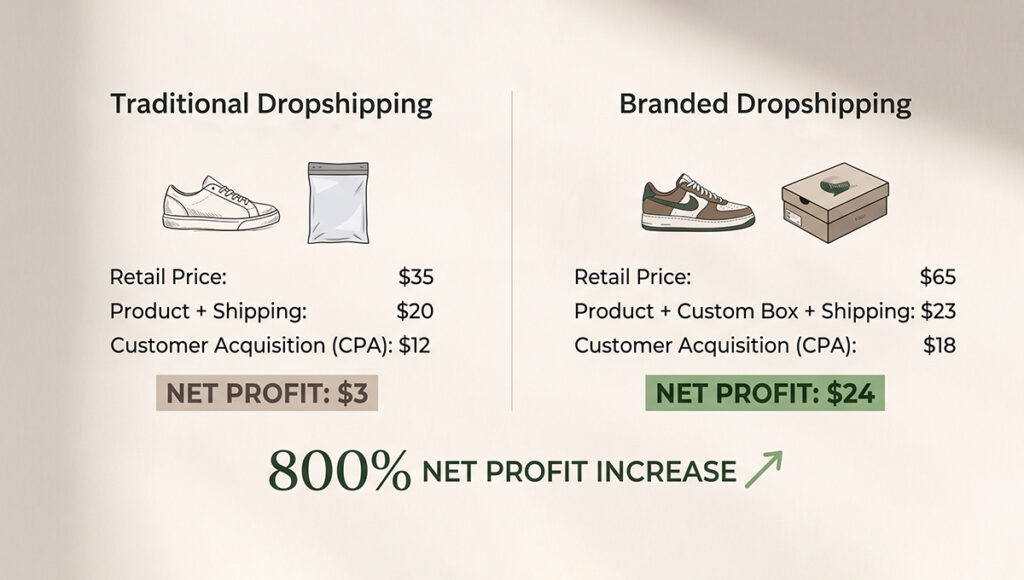
Let’s look at a real-world financial breakdown of selling sneakers:
Selling generic sneakers (traditional dropshipping):
- Product cost + shipping: $20
- Retail price: $35
- CPA: $12
- Net profit: $3
Selling custom branded sneakers (branded dropshipping):
- Product cost + custom shoebox + shipping: $23
- Retail price: $65 (Consumers are willing to pay a premium for a unique brand)
- CPA: $18
- Net profit: $24
Because the perceived value of a branded product increases exponentially, the net profit per order skyrockets by 800%!
7 Steps to Launching Your Branded Dropshipping Business
1. Pinpoint a micro-niche
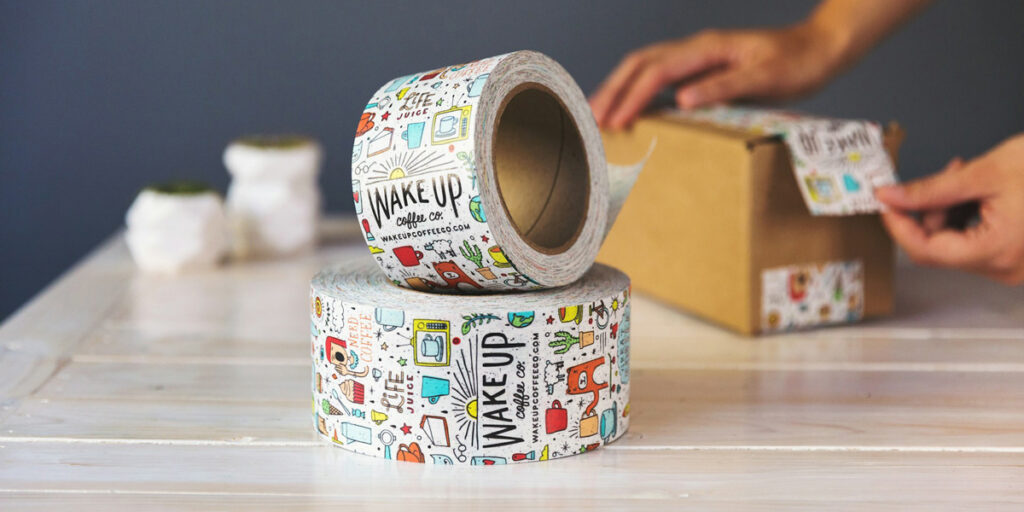
Don’t just sell generic “apparel.” Sell “eco-friendly running shoes designed for beginner marathoners.” The era of general stores is over; the more specialized and hyper-targeted your niche, the easier it is to win.
Actionable tip: Use Google Trends, TikTok search (like #TikTokMadeMeBuyIt), or Pinterest Predicts to spot emerging subcultures and niche demands. You can also browse Reddit to see if there are active discussions around these topics.
For more strategies on selecting a niche, check out the article What Is a Niche?.
2. Create a premium brand identity and unboxing experience
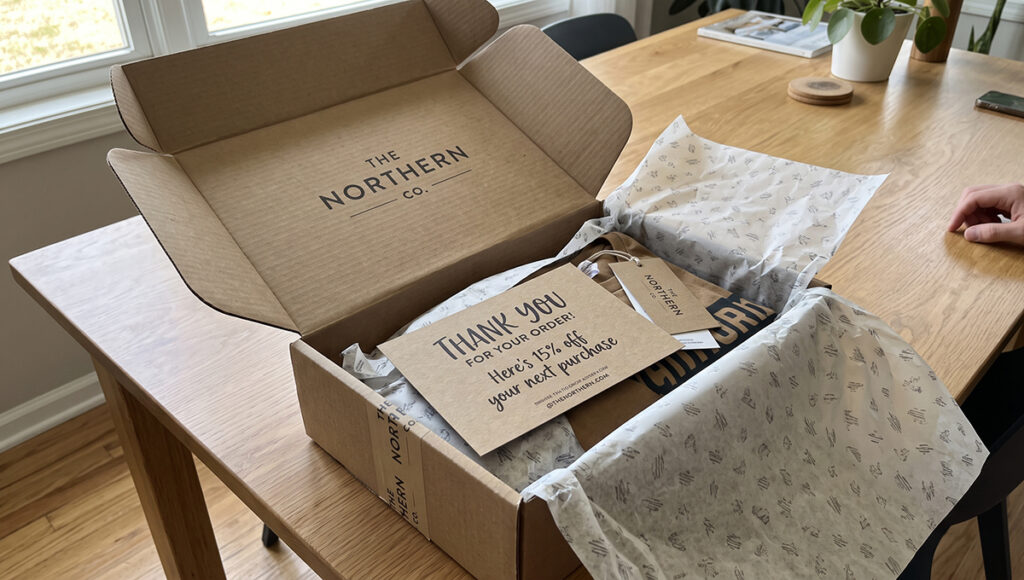
Your brand is more than just a logo; it’s the feeling your customer gets the moment they open their package.
Brand tone: Is your brand fun and playful, minimalist, or does it convey affordable luxury? This needs to be reflected across your entire website.
Unboxing elements: This is how you separate yourself from amateur sellers. Use platforms that offer custom packaging services. For instance, Zendrop and EPROLO allow you to add custom tape, personalized thank-you cards, and package inserts to your orders.
3. Find reliable white-label suppliers
Your supplier is your most vital business partner. You need a dropshipping provider that specializes in POD and white-label customization.
Criteria for choosing a supplier:
Zero MOQ (Minimum Order Quantity): You should be able to get brand customization even if you only sell one item. Some dropshipping suppliers require you to place a large bulk order in advance (like 1,000 units) just to qualify for custom packaging.
Deep customization capabilities: Look for suppliers offering embroidery, custom neck tags, and extensive shoe customization.
Sample testing: Always order samples first. JetPrint’s free 3D mockup generator lets you see exactly how your branding will look on hundreds of products before you spend a single dime.
4. Curate your product line
Don’t cram 500 random products into your storefront. Start with a core collection of 5 to 10 high-quality, deeply customized items.
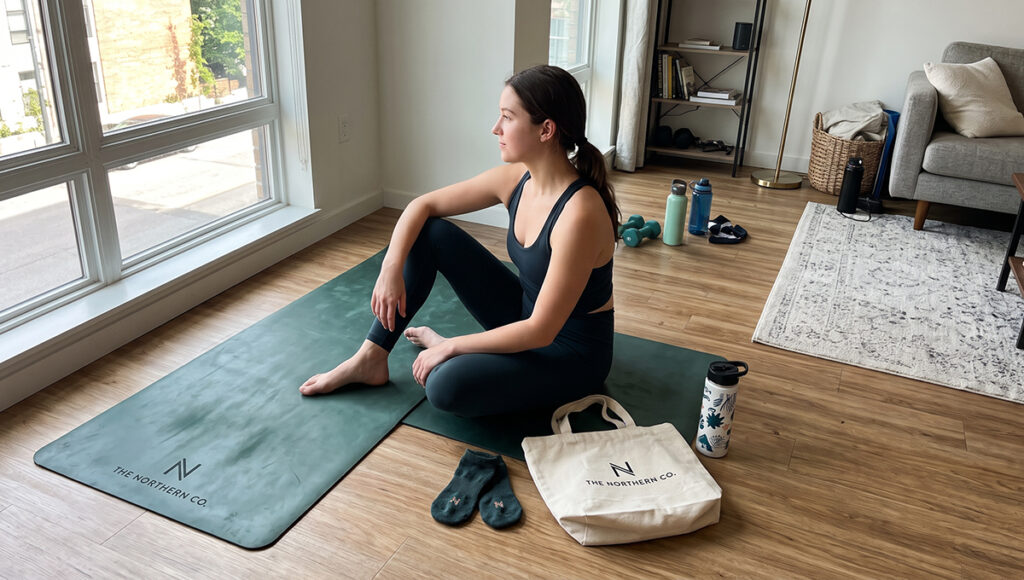
If your niche is eco-conscious yoga enthusiasts, you could start with a custom-printed yoga mat, yoga pants with an embroidered logo, and a pair of yoga socks featuring your branding.
5. Build a high-converting storefront
Whether you choose Shopify, WooCommerce, or Wix, your store needs to look like an established, million-dollar brand.
Use high-definition lifestyle imagery instead of plain white-background photos. If you can’t shoot lifestyle photos yourself, you can use the image generation features of Gemini or ChatGPT. In my personal experience, ChatGPT tends to generate more realistic images that better capture your vision.
Write product descriptions focused on solving pain points and highlighting benefits. You need to convince consumers that your product is the exact solution to their problems.
Trust signals: Clearly display shipping times, return policies, and UGC like customer photos and reviews.
6. Combine organic traffic with paid ads
Branded dropshipping has a built-in marketing advantage because your products are visually unique.
Short-form video marketing (TikTok/Instagram Reels): Have samples shipped to your house and shoot highly aesthetic unboxing videos featuring your custom packaging.
Micro-influencer partnerships: Send your branded products for free to niche influencers with 3K to 30K followers in exchange for authentic review videos. Keep in mind that using these videos for paid ads usually requires paying additional licensing fees.
Paid advertising: Take the high-quality creatives shot by influencers and use them to run Meta ads and Google PMax campaigns.
7. Focus on retention and repeat purchases
Because your customers received a beautifully branded package—potentially including an exclusive thank-you card with a 20% off discount code for their next order—they will actually remember your name. Use Klaviyo or Shopify’s built-in tools to set up automated email marketing, allowing you to retarget past customers every time you drop new products.
Final thoughts
Anyone can copy your winning product, but no one can copy your brand. Building a brand is a long game, but in today’s landscape, branded dropshipping is a path you simply have to take.
Branded dropshipping is no longer just an “option” in e-commerce—it has become the standard for survival. By focusing on a niche audience, delivering an exceptional unboxing experience, and partnering with a reliable print-on-demand supplier like JetPrint, you can build a scalable, profitable business with zero inventory and zero risk.
Ready to build your brand with JetPrint?
FAQ
Is it legal to dropship branded products?
Yes, branded dropshipping is legal. You can place your brand logo anywhere on your products. When designing your brand logo, make sure to avoid using one that resembles a copyrighted logo.
How much do branded dropshippers make?
There isn’t a specific answer to this question. Your earnings from branded dropshipping can vary based on factors like product positioning, marketing strategy, your designs, and more.
How is branded dropshipping different from regular dropshipping?
In regular dropshipping, the supplier ships generic, non-branded products directly to customers. In branded dropshipping, the seller can add custom branding, logos, or unique packaging, which helps build brand recognition and loyalty.
How do I find suppliers for branded dropshipping?
Look for suppliers that offer custom branding services. Many platforms, such as the Shopify app store or Alibaba, provide branded product options, or you can work directly with a print-on-demand company like JetPrint.
0 Comments