

If you can’t clearly define what you do and who you’re serving, all your marketing efforts are just a waste of time.
That’s why finding your niche isn’t just a clever marketing tactic; it’s an absolute survival rule for e-commerce sellers. The core idea is to carve out a specialized slice of a massive market so you’re no longer just “an option” for everyday consumers but the only option for a highly specific group of people.
But what exactly is a niche? Why does it matter so much? And most importantly, as a print-on-demand seller, how do you find a highly profitable one? This comprehensive guide will walk you through everything you need to know.
What is a niche?
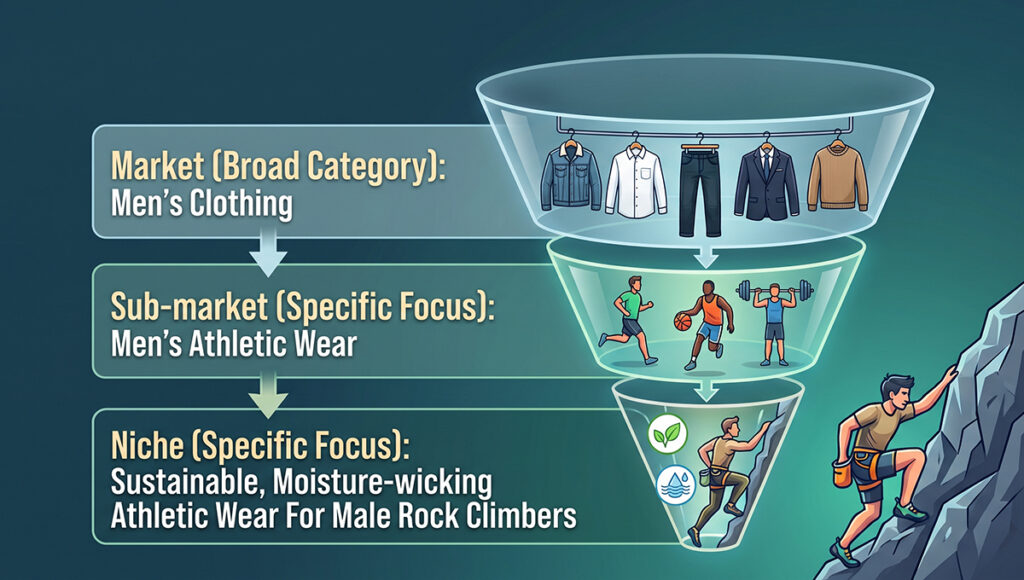
In business, a niche is a highly specialized segment of a much larger market. It targets a specific group of customers with distinct needs, interests, pain points, or preferences.
Simply put: Broad market = a wide category; Niche = a laser-focused subsegment.
Broad market: Men’s apparel
Sub-market: Men’s activewear
Niche: Eco-friendly, sweat-wicking activewear designed specifically for male rock climbers.
Why focus on a niche?
Why should we intentionally shrink our target audience? Because in e-commerce, narrowing your focus actually multiplies your profits. Here are the core advantages of targeting a niche market:
Escape cutthroat competition
If you’re selling generic phone cases, you’re competing against Amazon, Walmart, and millions of other sellers. But if you’re selling “custom Renaissance-style pet portrait phone cases,” your competition drops to almost zero. Less noise means your brand can stand out effortlessly.
Laser-focused marketing spend
Advertising to “everyone” is incredibly expensive and inefficient. But targeting “women in their 30s who love pets and art” is highly precise. The algorithms on Facebook, Instagram, and TikTok can easily track down these exact buyers, drastically lowering your customer acquisition costs and boosting your ROI. That said, no ads are truly cheap these days. Even when you’ve nailed down a niche, consumers have diverse interests, meaning your ideal customer will inevitably overlap with other brands’ target audiences.
Command premium pricing and higher profit margins
Consumers are notoriously price-sensitive when it comes to generic, mass-market commodities—they love to comparison shop. However, when a product directly reflects someone’s passions or identity, it becomes an emotional purchase. Niche customers are more than happy to pay a premium for a product that deeply resonates with their specific interests.
Fierce brand loyalty
When you serve a highly specific community, you’re no longer just a faceless storefront; you become an extension of their identity. This transforms one-time buyers into loyal brand ambassadors who will naturally recommend you to their friends and keep coming back for more.
How to find a niche market

You might be wondering, now that you understand what a niche is and the benefits of focusing on one, how do you find your niche and ensure it aligns with your idea?
To find the right niche, where your strengths meet the needs of a specific audience, consider the following steps:
1. Identify your passions and interests
What drives you? What do you enjoy doing? When starting a business, consider topics, hobbies, or industries you’re naturally passionate about. While your goal may be to increase profits, if you choose a niche solely for the money and not because you enjoy it, you’ll likely lose creativity and patience over time.
2. Evaluate your ideas and market demand
Passion without demand is just a hobby, not a business. Use these tools to validate your idea:
Google trends: Plug in your niche idea. Is the trend line pointing upward over the last five years? In which specific countries or regions is it most popular?
Social media hashtags: Search on TikTok and Instagram. Are videos related to this niche still getting high engagement in 2026?
Keyword tools: Use Ahrefs, SEMrush, or Google Keyword Planner. You’re looking for keywords with solid search volume (over 1,000 searches per month) but low SEO competition.
3. Analyze competitors
Search for your niche on Etsy and Google. Take a look at the top sellers and ask yourself:
What’s missing from their designs?
Is their product range too limited? (For example, they might only sell T-shirts, giving you the perfect opportunity to stand out by offering custom shoes or vegan leather bags through JetPrint!)
Read their negative reviews—what customer pain points are they complaining about that you could actually solve? These complaints are your exact roadmap for improvement.
4. Test and validate your ideas
Never buy inventory in bulk before validating your idea! The smartest way to test a niche market is by using the print-on-demand model.
Quickly set up a Shopify or Wix storefront (or an Etsy shop).
Seamlessly integrate it with JetPrint.
Design 5-10 products tailored specifically to that niche.
Run $20–$50 worth of highly targeted social media ads.
If you get engagement, clicks, and actual orders—congratulations, your niche is validated! If not, your cost of trial and error is negligible, and you can pivot immediately to test your next idea.
Deep dive into niche case studies: Afroyla and Alice mushrooms
Theory always sounds great on paper, but how do niche markets actually play out in the real business world? Let’s look at two independent e-commerce brands with completely different angles—but equal success—to see how narrowing your focus translates into premium pricing and fierce brand loyalty. One is Afroyla, which sells bags using print-on-demand services, and the other is Alice Mushrooms, which formulates its own proprietary chocolates.
Case study 1: Afroyla
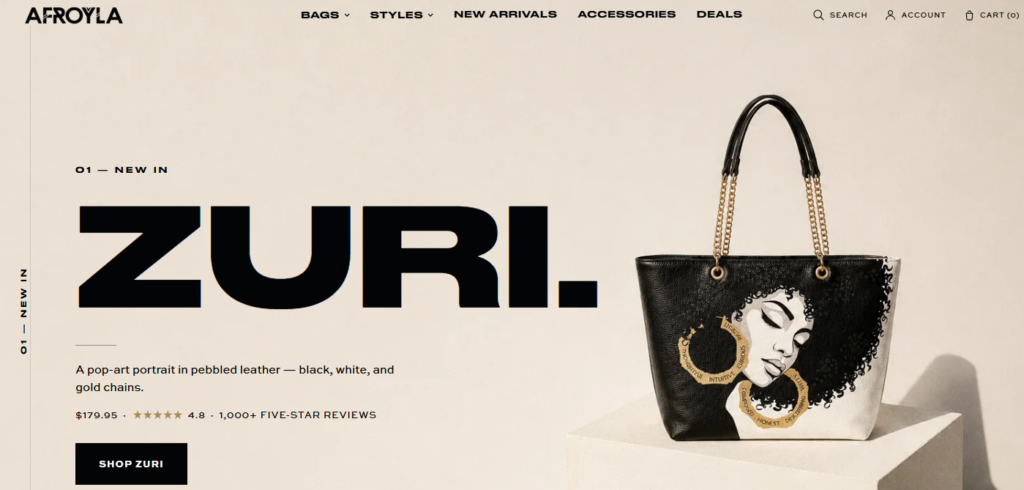
Their niche: Premium leather bags and accessories designed specifically for Black women, celebrating Black cultural pride.
How they avoided the red ocean: The women’s handbag market is arguably one of the most brutally competitive, commoditized spaces out there. Instead of pushing basic designs that cater to mainstream aesthetics, Afroyla turned iconic features of Black women—like afros, dreadlocks, and traditional headwraps—into the core visual art of their bags.
The profitability of the niche: When a product perfectly reflects a consumer’s identity, it completely escapes the price-comparison trap. Afroyla’s bags retail for nearly $150 and are still in incredibly high demand. To their customers, these aren’t just containers for everyday items; they are statements of self-expression. This intense emotional connection not only drives sky-high conversion rates but also inspires customers to organically gift these products to older and younger generations in their families, triggering explosive word-of-mouth growth with zero ad spend.
Case study 2: Alice Mushrooms

Their niche: Premium functional mushroom chocolates (natural supplements focused on mood regulation and cognitive enhancement).
How they avoided the red ocean: If they just sold dark chocolate, they’d be crushed by mass-market corporate giants. If they sold traditional vitamin pills, they’d be dragged into a lifeless supplement price war. Alice Mushrooms brilliantly combined the two, turning medicinal mushrooms (like Reishi and Cordyceps) into beautifully packaged, everyday chocolate treats.
The profitability of the niche: They targeted a health-conscious younger generation willing to pay for a sense of daily ritual. By categorizing their products by use case (like “Focus” for the daytime and “Sleep” for the night), they aren’t just selling chocolate anymore—they’re selling the emotional value of effortless wellness. This not only justifies a hefty premium but also naturally drives a highly lucrative subscription model.
Both of these brands prove the exact same e-commerce truth: don’t try to be everything to everyone. Find that small group of people with a unique pain point or a strong emotional desire who become the only option in their world, and your profit margins will multiply rapidly.
High-profit print on demand niches
Once you understand the concept of a “niche,” one of the most beginner-friendly ways to put it into practice is through print-on-demand. With POD, you don’t have to worry about holding inventory. Instead, your goal is to find a hyper-targeted audience and design custom products specifically for them.
For example, targeting “gamers” is way too broad. But targeting “fans of ’80s and ’90s retro arcade nostalgia”? That’s a highly profitable POD niche. When you tap into the passion of a highly specific audience, your conversion rates will skyrocket.
Want to discover the most lucrative markets right now?
Read my full guide here: 10 Profitable Print on Demand Niches in 2026
Conclusion
Understanding what a niche is goes beyond just defining your target audience—it’s about carving out a unique position in the market and enabling your brand to truly thrive.
By identifying your niche, you can build a strong connection with customers who value your products, differentiate yourself from the competition, and create a brand that resonates on a deeper level.
Whether you’re just starting or refining your business, finding the right niche is crucial for long-term success and growth. Embrace the process, focus on what sets you apart, and watch your business flourish.
FAQ
Can a niche be too small?
Yes, if not enough people are interested in the niche, it may not be profitable.
Can I switch niches later?
Yes. If you find that the niche isn’t getting good feedback during validation, switching niches may become necessary.
Can a single store target multiple niches at once?
I highly advise against this for beginners. Selling “nurse-themed T-shirts” alongside “cartoon illustrations for programmers” in the same shop will only confuse your customers and destroy your brand’s focus. The most effective strategy is to establish a successful niche store and automate its operations before introducing a second, entirely independent store.
What are the challenges of focusing on a niche for a business?
1. Limited market size: Niches may limit your customer base and revenue potential.
2. Market volatility: Niches are often sensitive to trends and external factors, causing market demand to change quickly and unpredictably.
3. Intense competition: Niches attract highly specialized competitors, making it more difficult to stand out or maintain market share.
0 Comments