Whether you’re a seasoned designer or a complete beginner with zero design experience, this comprehensive guide will walk you through the exact blueprint for building, launching, and scaling a highly profitable print-on-demand business from scratch.
What is print on demand?
Print-on-demand is a type of dropshipping model. You sell custom-designed products online, but a third-party supplier only prints, packs, and ships the items after a customer actually places an order. You only incur product and shipping costs after a sale, completely eliminating inventory risk.
As a seller, your main focus is choosing a niche, creating designs, and marketing your products, while your POD partner handles all the back-end fulfillment and logistics.
How to start a print-on-demand business
Follow these steps to turn your ideas into profit with print-on-demand. You’ve probably watched plenty of YouTube tutorials or done your own research online, but the steps below are based on real, practical advice we’ve gathered directly from our conversations with actual sellers.
1. Choose a highly profitable niche
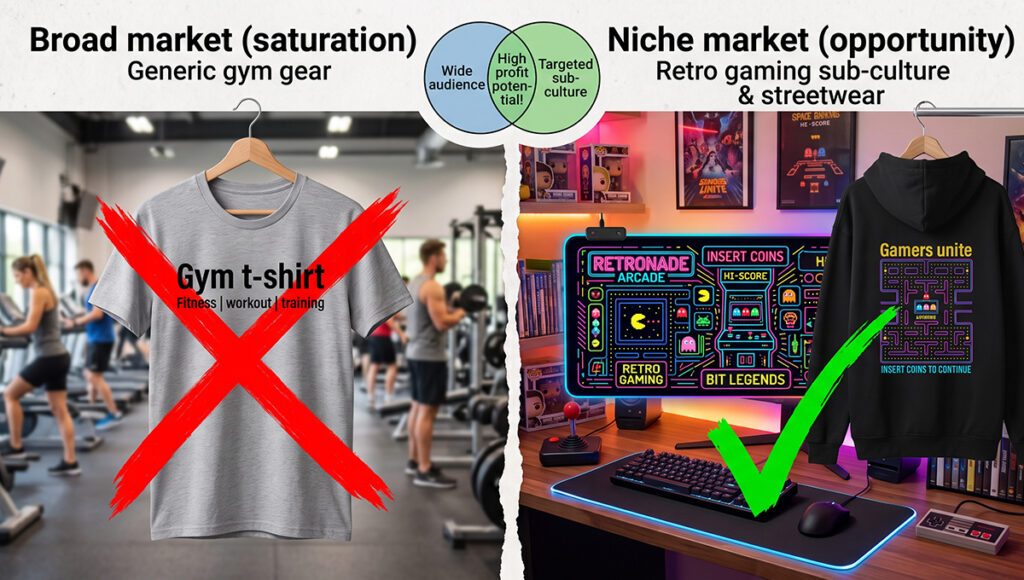
A niche is a highly targeted audience with specific interests. For example, “fitness” is far too broad, but “yoga gear for pregnant women” is a laser-focused niche. Another example would be 80s and 90s retro arcade nostalgia within the gaming space. A highly specialized vertical can drastically lower your ad costs and build incredible customer loyalty. This might sound cliché—everyone tells you to find a niche, but nobody tells you exactly how to do it. We won’t dive too deep into finding a niche right here, but you can check out our related articles on the topic.
Analyze market trends: Use Google Trends to ensure your chosen niche has steady, year-round interest rather than just being a passing seasonal fad.
Keyword and competitor research: Use tools like Semrush or Ahrefs to check the search volume for specific product ideas. If the keyword difficulty is too high, it means your chosen niche is oversaturated with competitors, and you’ll need to pivot to a different one.
Combine passion with profit: Choose an audience you genuinely understand. If you know the lingo and inside jokes of a specific community (like vintage mechanical keyboard enthusiasts), your designs will resonate much stronger than generic graphics. This insider knowledge also makes running ads a breeze.
2. Select high-margin POD products

While basic products (like t-shirts, hoodies, mugs, and phone cases) are great for moving volume, their thin profit margins don’t leave much room for ad spend. If you throw unpredictable ad costs into a sea of basic product sellers, you are bound to start losing money. On the flip side, premium and unique items yield much higher profit margins and face far less cutthroat competition.
Basic products: T-shirts, tote bags, baseball caps, phone cases, and mugs. These are easy to design for, but you’ll need to push serious volume to see any substantial profit.
High-profit products: Custom footwear, custom basketballs, vegan leather bags, premium watches, and streetwear.
Make sure your products perfectly align with your audience. If you’re targeting sneakerheads or streetwear fans, using suppliers like JetPrint or Printify to offer custom-designed sneakers or high-tops will instantly make your brand stand out from thousands of other print-on-demand stores. Alternatively, if your audience consists of arcade gaming fans, large mouse pads featuring retro arcade designs should be your go-to.
3. Find a reliable POD supplier
Some tutorials will tell you to prioritize choosing a supplier since they are the backbone of your business. While I agree that suppliers are crucial for any POD merchant, I still believe that product selection should come first. For instance, let’s say you’re looking to sell an oversized LED mouse pad. Printful might be your go-to among well-known suppliers, but what if they don’t carry that specific item? As a merchant, are you going to settle for a small, non-LED mouse pad instead? Obviously not.
Getting back to POD suppliers—if they ship out poor-quality products or are constantly delayed, your brand reputation is the one that will pay the price. You need to evaluate suppliers based on product quality, production turnaround times, ease of platform integration, base costs, and product variety. I’ve put product variety last because while it dictates how easily you can expand your catalog later on, it doesn’t solve the immediate problem of whether they carry your core products right now.
JetPrint: Perfect for brands looking to stand out with high-end, highly differentiated products like custom shoes, watches, and vegan leather bags.
Printify & Gelato: Ideal for scaling basic apparel sales. They boast a massive global network of print providers, allowing you to route orders to the facility closest to your customer.
Tapstitch & Apliiq: Great choices for sellers wanting to focus on the streetwear market.
Pro Tip: You don’t have to tie yourself down to just one supplier. You can connect multiple POD apps to your Shopify or Etsy store simultaneously to curate the perfect product line. However, keep in mind that if a customer purchases several items sourced from two or more different suppliers, they may receive their order in separate shipments at different times due to varying fulfillment schedules.
4. Master your financials
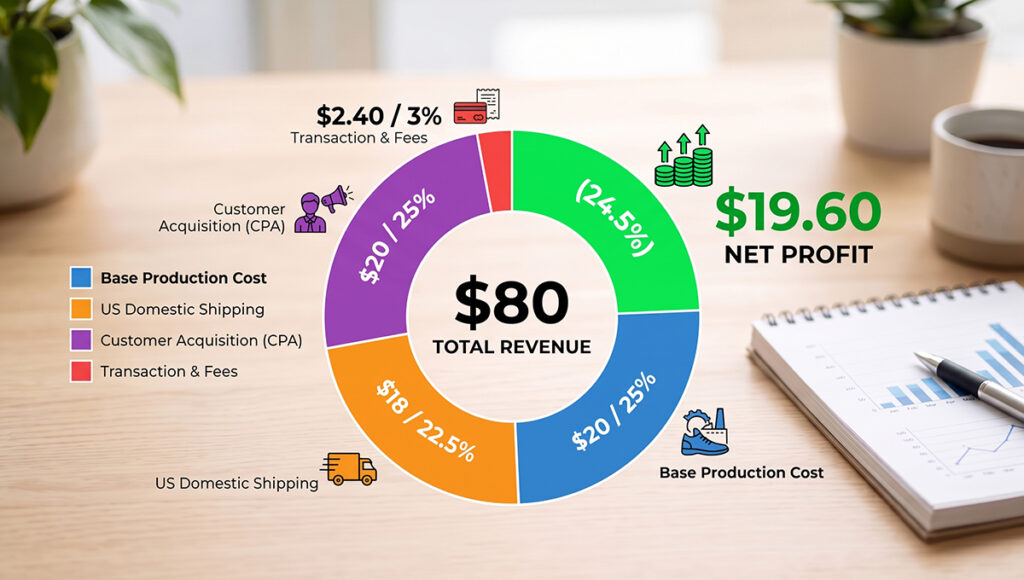
Many beginners fail because they do not properly calculate their margins. While POD requires zero inventory, launching a legitimate business still requires a minimal upfront budget.
Estimated startup budget (first 30 days)
| Expense category | Description | Estimated cost |
| E-commerce platform | Shopify basic plan (monthly) | $39.00 |
| Custom domain | Professional URL (annual) | $15.00 |
| Design tools | Midjourney / Canva Pro (monthly ) | $20.00 |
| Sample orders | Testing product quality (one-time) | $50.00 – $100.00 |
| Total startup cost | Minimum required to launch | $124.00 – $174.00 |
The profit formula
To price your products correctly, use this formula:
Retail price = base product cost + shipping cost + platform transaction fees + marketing cost + desired net profit
Example calculation for Custom Shoes:Base cost: $20.00
Shipping to US: $18.00
Estimated ad cost per acquisition (CPA): $20.00
Transaction fee (approx 3%): $2.4
Your retail price: $80.00
Net profit: $19.6 per pair
5. Create exclusive designs
Product pricing is determined by multiple factors. The floor is your base cost, while the ceiling is your audience’s perceived value. Within that range, your exact price dynamically shifts based on competitor strategies, brand equity, and market supply and demand.
When your product achieves absolute differentiation (true uniqueness) through its design, you break free from cookie-cutter competition, take control of your pricing, and command a high premium.
Ultimately, whether a product actually sells (converts) comes down to three core pillars: effectively reaching your target audience, hitting on their core pain points, and ensuring they have the purchasing power to buy it.
So, instead of worrying about whether a product will sell, ask yourself if you’ve targeted a specific niche and created a truly unique design.
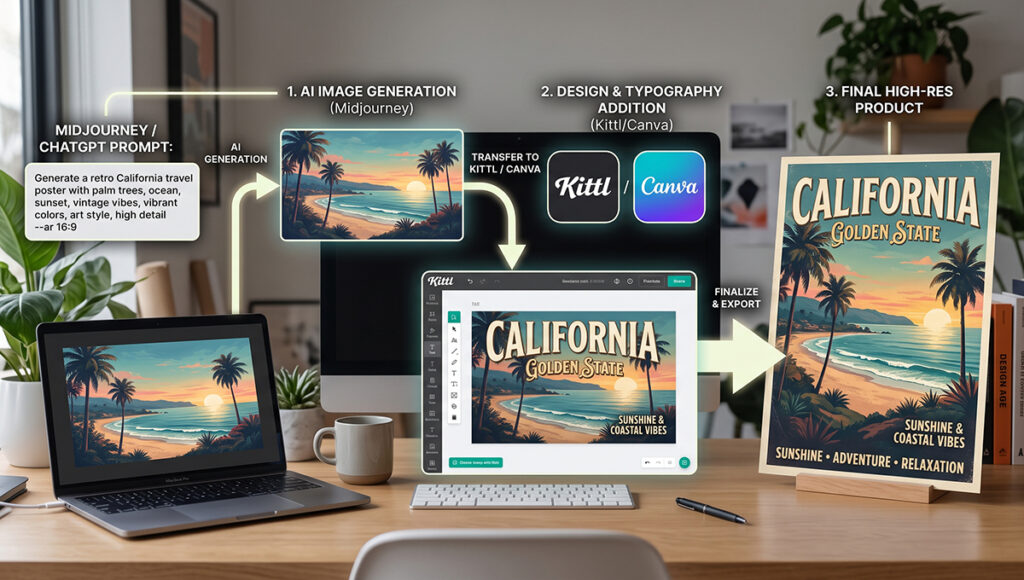
Today, you no longer need to be an Adobe Illustrator expert to create best-selling designs. AI and professional typography tools have completely leveled the playing field.
Generative AI (Gemini / ChatGPT): Use AI to generate intricate illustrations, seamless patterns, or artistic graphics. Just be sure to upscale your AI images using tools like Topaz Gigapixel or Vectorizer.ai to ensure they have a print-ready, high resolution (at least 300 DPI).
Typography & font design (Kittl / Canva): Text-only designs often outsell complex graphics. Use Kittl to create designs with a vintage feel and advanced text-warping effects for an incredibly professional look.
Copyright compliance: Never use trademarked logos, movie characters, or celebrity likenesses. Stick to original concepts, public domain assets, or fonts and graphics that you have purchased with full commercial licensing.
6. Set up your online store
You have two main sales channels, and many successful brands eventually end up utilizing both:
Marketplaces with built-in traffic (Etsy, TikTok Shop): Perfect for beginners with a zero-dollar budget. These platforms already have built-in search traffic, so you just need to optimize your product titles and tags, and the algorithm will push your items to buyers. The trade-off is steeper competition and platform fees.
Independent storefronts (Shopify, WooCommerce, Wix): Best for long-term brand building. You own your customers’ complete data and have total control over your site’s visual aesthetics. The catch is that you have to drive 100% of your own traffic through social media, SEO, or paid ads.
If you are a seller on a tight budget, I highly recommend starting with platforms that already have built-in traffic.
7. Order samples and ensure quality control
Never list a product you haven’t seen in person. Ordering samples allows you to verify a few crucial details:
Color accuracy: RGB colors on your screen will differ from the printed CMYK colors. Make sure your design doesn’t look dull or muddy once it actually gets printed.
Print placement and proportion: Confirm that the real-life placement and scale of your design match what you saw on your digital mockups.
Material and feel: Get a real feel for the fabric or the material of the shoes. If you wouldn’t wear it yourself, don’t expect your customers to pay for it.Shooting marketing assets: Use your physical samples to shoot authentic, lifestyle-focused short videos and photos. This type of content has a dramatically higher conversion rate on social media than sterile, computer-generated mockups. You can also use these shots as your main product listing photos, which are far more engaging than relying on the generic images provided by your supplier.
8. Promote your products
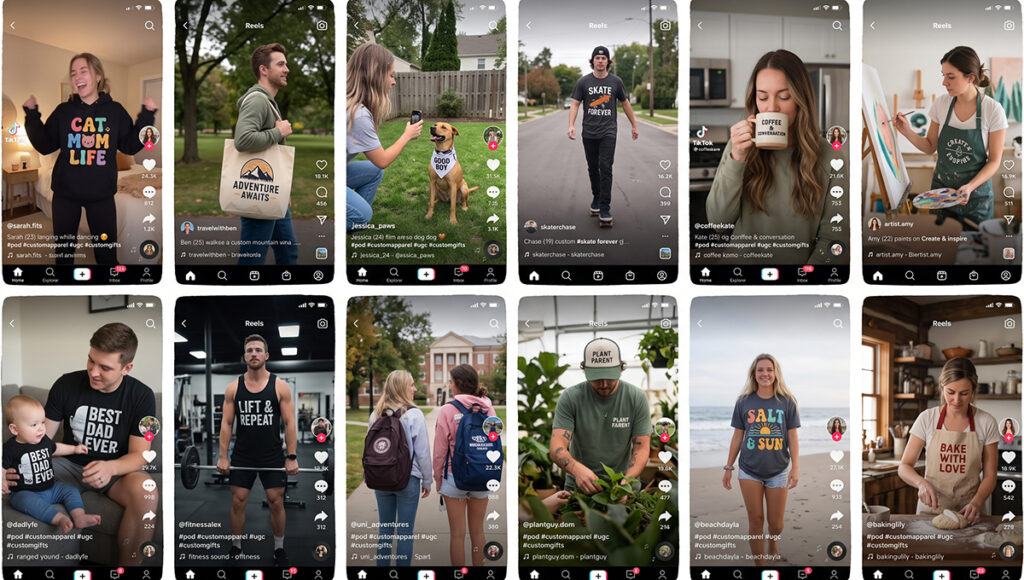
You can have the best designs in the world, but if no one knows about them, it doesn’t matter. Promotion is key. Use social media, email marketing, and even good old-fashioned word of mouth to spread the word. Don’t be shy—this is your business, your livelihood.
Here’s how to promote your products and increase sales:
SEO
Optimize your product listings with relevant keywords to improve search engine visibility. Use tools like Google Keyword Planner and Semrush to find the best keywords.
Long-tail keywords are specific phrases that potential customers might search for. These keywords usually have lower competition and higher conversion rates, making them ideal for targeting a niche audience.
Related articles:
The Beginner’s Guide to Etsy SEO
10 Best Etsy SEO Tools to Get More Free Traffic
Social media marketing
Take advantage of platforms like Instagram, Pinterest, and TikTok to showcase your products. Share high-quality images, engage with potential customers, and don’t forget to use hashtags to reach a broader audience.
Email marketing
Build an email list to stay in touch with your customers. Send newsletters featuring new products, promotions, and customer testimonials.
Create content
If you use an e-commerce platform to build your store, it’s easy to create a blog. Writing about topics related to your products or potential buyers can attract visitors and convert them into customers, while also positioning your website as professional.
Paid advertising
Google Ads and Facebook Ads
Paid advertising can increase visibility and drive targeted traffic to your store. Start with a small budget, test different ad creatives, and optimize based on performance. When running ads, focus on your target audience and avoid showing your ads to everyone.
Work with influencers
This method can quickly introduce your products to potential customers. The biggest challenge might be finding and negotiating with influencers. Choose active influencers on TikTok or Instagram rather than YouTube. TikTok and Instagram have more buyers than sellers, making these platforms more likely to attract customers who appreciate your designs and make purchases.
Do I need an LLC to start a POD business?
No, you can start out as a sole proprietor. However, once your business starts generating consistent revenue (like over $1,000 a month) or you begin running paid ads, it’s highly recommended that you form an LLC to protect your personal assets.
How do I handle returns and exchanges?
Since POD products are made-to-order, suppliers typically only offer refunds or replacements for defective items or printing errors. You’ll need to set a strict return policy on your storefront that clearly states you do not accept returns for “buyer’s remorse” or wrong sizes. If an item actually arrives damaged, your supplier will refund you or send a free replacement.
Is a print-on-demand business profitable?
Yes, but it’s no longer as easy as just uploading designs and waiting for the sales to roll in. Today, you need to focus on a specific niche and be patient as you grow your business.
Related article: Is Print-on-Demand Profitable?
Starting a print-on-demand business requires doing deep market research, a willingness to test out different designs, and staying persistent with your marketing. By offering a unique product line, keeping a close eye on your profit margins, and mastering modern AI design tools, you can absolutely build a highly profitable, independent e-commerce brand from scratch.
0 Comments