Is Print on Demand Worth It in 2026? Real Costs & Margins
Yes, print on demand is still worthwhile in 2026. As long as you go in with the right mindset. Think of it as a low-cost way to test products or monetize an existing brand, definitely not a passive-income shortcut where you just upload a few designs and watch the money roll in.
If you’re still hoping to slap a few cliché quotes onto t-shirts and wait for the orders to pour in, you’ll most likely just end up losing money on monthly platform fees and ad spend. On the flip side, if you’ve locked down a clear niche, have original designs, and actually know how you’re going to drive traffic, POD is still the lowest-risk way to launch a physical product business with zero inventory and no upfront stock.
Below, I’ll lay out the real profit numbers and the core pros and cons, then give you a clear set of criteria to help you figure out if this business is actually right for you.
Contents 8 sections
How print-on-demand works and why the market has changed
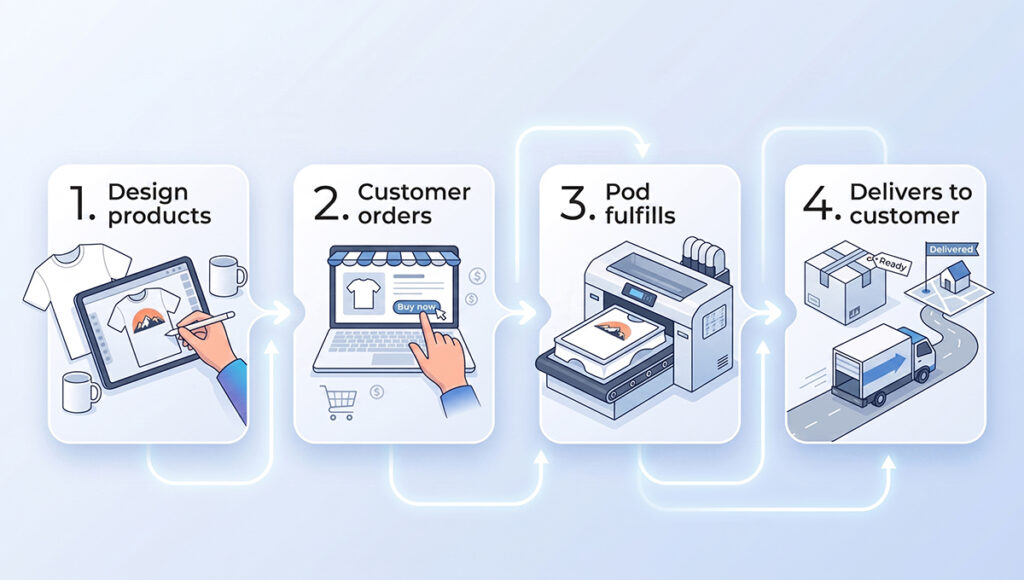
The print-on-demand process is actually pretty simple: you create custom designs and list your products (like apparel, mugs, handbags, and shoes) on your own online store or an e-commerce marketplace. You only pay the supplier after a customer actually places an order and pays you, and then the supplier handles printing, packing, and shipping it straight to the buyer.
Back in the day, you could just upload hundreds of designs in bulk to a marketplace and bring in a steady stream of organic orders. Things are different now. With AI design tools everywhere and the barrier to entry practically nonexistent, mainstream categories are flooded with look-alike products. Buyers have gotten pickier, ad costs keep climbing, and platform algorithms increasingly favor original designs and trusted brands. This push for originality works the exact same way social media does: platforms need a constant stream of fresh, original content to attract and keep users. If you saw the exact same thing every single day, I’m sure you’d get tired of it, too.
Simply put, the game has changed. Moving forward, the winners won’t be the sellers flooding the market with massive catalogs. Instead, it’ll be the independent brands, content creators, and designers who serve a specific audience and focus on a dedicated niche. For them, print-on-demand is a tool to test out new ideas with zero financial risk.
How to calculate your real print-on-demand profit margin
A lot of beginners overestimate print-on-demand profits at first because they just do simple math: retail price minus base cost. To figure out if this business is actually worth it, you have to subtract every single expense and look at the real net profit margin you actually take home.
Let’s break down the real numbers for a mid-range custom-printed hoodie selling for $45.00:
| Cost item | Estimated amount | Notes |
| Retail price | $45.00 | What the customer actually pays (excluding tax) |
| Base product + printing | -$18.50 | Blank hoodie cost + print |
| Shipping (if offering “free shipping”) | -$7.50 | Shipping cost baked into the retail price |
| Payment / platform fees (~5.5%–8%) | -$2.50 | Transaction, listing, and payment processing fees |
| Customer acquisition cost (ads / promo) | -$10.00 | Average marketing spend per order (lower with organic traffic) |
| Estimated net profit | $6.50 | ~14.4% net profit margin |
What’s the takeaway here?
Low-ticket items like $20 t-shirts have razor-thin margins. Once you subtract the base cost and platform fees, you’re probably left with just $3 to $5 per shirt, leaving almost no room to run paid ads.
Products that look and feel more substantial and valuable are actually much easier to make money on. Heavyweight hoodies, embroidered baseball caps, shoes, and PU leather handbags can typically hit a 20% to 50% net profit margin, giving you a much more comfortable cushion for marketing and customer service.
On top of that, organic traffic can boost your profits by a wide margin. If you already have an audience (like social media followers, an email list, a community, or SEO traffic), your customer acquisition cost is practically negligible, and the net profit you pocket will naturally be much higher.
The real pros and cons of print-on-demand
Pros
- No dead inventory to worry about: You’ll never get stuck with 200 unsold medium hoodies sitting in a warehouse. Even if a design completely flops, you don’t lose a dime on leftover stock.
- Fast product testing: Within a single week, you can test several different design styles or selling angles, see how they actually convert in the market, and then put your budget behind the winners.
- High flexibility from anywhere: Because production and shipping are mostly automated, all you need is a laptop to run the business, freeing you up to focus entirely on design, branding, and marketing.
- Easy personalization: Since everything is made to order, you can easily offer custom names, anniversary dates, or niche-specific designs—something traditional bulk brands struggle to pull off.
Cons
- Higher cost per unit: Printing items one by one will always cost significantly more than printing 500 units in bulk.
- Limited control over quality and packaging: Your product quality depends heavily on your supplier’s blank catalog, printing methods, and packaging options. If a print comes out crooked or a shipment gets delayed, it’s your brand’s reputation that takes the hit.
- Longer shipping and delivery times: Since production doesn’t start until a customer places an order, overall delivery takes longer than standard e-commerce with ready-to-ship stock. You have to be upfront about this on your product pages or shipping policy page.
- Hidden startup costs still add up: Even though you don’t have to buy inventory, running a serious store isn’t free. You’ll still need to pay for physical samples, monthly platform fees, design software, and early ad spend to test products, with ads taking up the biggest chunk.
Print-on-demand vs. Bulk wholesale vs. Traditional dropshipping
If you’re weighing different e-commerce business models, here’s how the three stack up:
| Comparison factor | Print-on-demand | Bulk wholesale / custom manufacturing | Traditional dropshipping |
| Upfront investment | Low ($100–$500 for samples and store setup) | High ($2,000–$10,000+ for inventory) | Low ($100–$500) |
| Profit margin per unit | Medium (20%–40%) | High (50%–70%+) | Low to medium (10%–30%) |
| Brand differentiation | High (original designs and niche positioning) | Very high (custom materials, shapes, and packaging) | Low (often the exact same products as competitors) |
| Inventory risk | None | High | None |
| Best for | Testing products, creator merch, niche brands | Scaling proven winners | Testing trending products |
Pro tip: A lot of successful brands actually use a hybrid model. They start by using print-on-demand to launch and validate new designs. Once a specific design consistently sells 50+ units a month, they immediately move that bestseller to a local factory for bulk printing, effectively doubling their profit margins.
Who is print-on-demand actually right for?

If you fall into any of these groups, POD is definitely worth a shot:
- Designers, illustrators, or creative partners: You want to monetize your original work without dropping thousands of dollars on inventory upfront.
- Content creators, community leaders, or small businesses: You already have an audience or customer base and want to naturally roll out your own branded merch.
- Niche-savvy marketers: You know how to target passionate niche audiences (for example, selling leather bags that celebrate the spirit of Black women, rather than generic leather bags aimed broadly at “fashion lovers”).
- Aspiring brand founders: You can check the POD market first to see if companies are already offering your target products, allowing you to test market demand at the lowest possible cost before investing heavily in bulk factory production.
On the flip side, if any of the following sound like you, it’s probably best to skip POD:
You’re just looking for a “set-it-and-forget-it” side hustle. Listing products is actually the easy part. Consistently driving targeted traffic and slowly building a real brand is the true long-term grind.
You plan to win on price. You’ll never beat major fast-fashion brands or big-box retailers on basic pricing. What actually wins in the end is the design itself and whether it gives buyers a sense of identity and emotional connection.
You’re not willing to pay for samples. Selling products you’ve never personally touched or run through the wash is the fastest way to rack up refund requests and bad reviews.
5 steps to making print-on-demand profitable
If you’re planning to get into POD, don’t just flood your store with random products right out of the gate. Treat it as a small test run first. Here are the 5 core steps to getting your POD business off the ground:
Pinpoint a specific niche and use case: Stay away from broad categories like “fitness” or “pets”—the competition is just too fierce. Dig deeper and target a tight-knit community, a specific hobby, or a gifting occasion so buyers see your product and immediately think, “This was made for me.”
Check trademarks and copyrights first: Never use trademarked phrases, song lyrics, or unlicensed artwork. This is especially true for popular IPs like movie, video game, or anime characters. All it takes is one infringement claim, and your store could be gone for good.
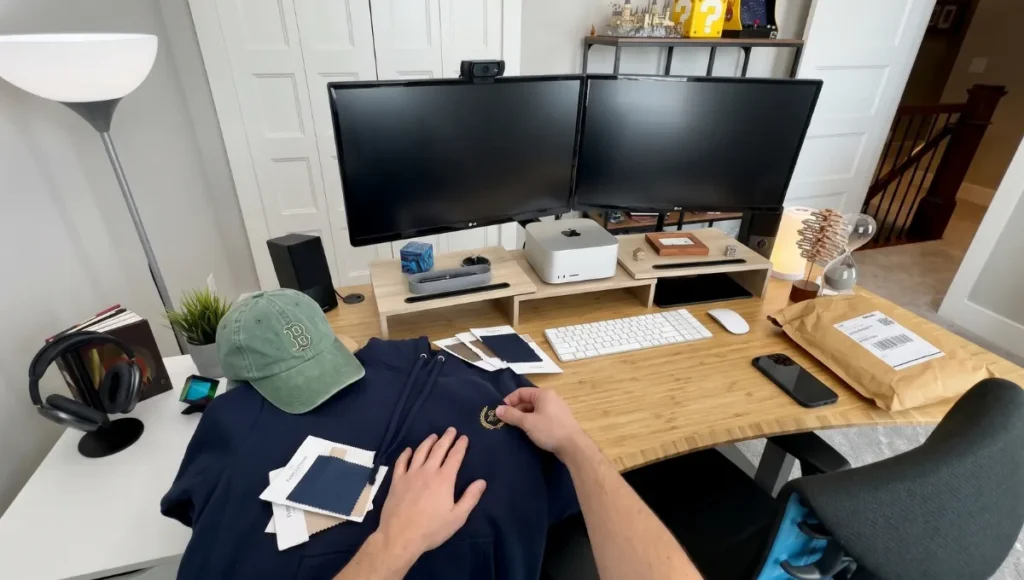
Order samples to check the quality yourself: Before you list your products or spend money on ads, order your core items to inspect them in person. Feel the fabric, check if the sizing is accurate, make sure the print looks crisp, and run them through the wash to see if the colors fade.
Do the math before setting your prices: Before you lock in your retail price, factor in the base cost, shipping, platform fees, and marketing expenses. Most POD suppliers list production and shipping costs separately. A lot of beginners overlook this, assuming the production cost is their final expense, and end up losing money on every sale.
Master one traffic channel first: Whether it’s marketplace SEO, short-form videos, or paid ads, focus on getting one channel to work before moving on. Don’t spread yourself too thin by trying to launch on four or five platforms at once. Also, if you don’t have a big budget for ads, starting on a platform with built-in traffic is a much safer bet. Etsy, for example, is a great place to start.
Related article: How to Start a Print-on-Demand Business
Final thoughts
At the end of the day, is print-on-demand worth it? If you want to test product ideas with zero inventory, monetize your own designs, or launch a niche brand on a tight budget, the answer is yes. It takes away the biggest financial barrier in retail: paying upfront for inventory that might never sell.
Just keep one thing in mind: print-on-demand only handles production and shipping; the marketing and traffic are still on you. As long as you treat it like a real business, protect your profit margins, and focus on creating products that genuinely resonate with a specific audience, it’s still a very real way to make money.
And one last reminder for anyone who made it this far: print-on-demand can never completely replace a real brand. If your goal is to build a brand, POD is really just your first step. Ultimately, you want to create unique products that are truly your own, one-of-a-kind items that only you sell on the market.
FAQ
Is print-on-demand oversaturated now?
Broad, mainstream categories are definitely heavily saturated. However, focused micro-niches, personalized gifts, and original designs with a distinct brand identity are nowhere near saturated. Competition only weeds out copycat sellers blindly chasing trends—not brands that genuinely serve a specific audience.
Related article: Is Print-on-Demand Still Profitable?
How much does it cost to start a print-on-demand business?
While you can technically set up a store for practically nothing, a realistic lean startup budget is around $200 to $500. That covers your domain name, monthly store or platform fees, physical samples, and a small budget for initial marketing tests.
How much can you actually make with print-on-demand?
Earnings vary wildly, from a few hundred dollars a month as a side hustle to six figures a year for established niche brands. How much you end up making depends far more on your traffic strategy and niche selection than on the print-on-demand business model itself.
Can print-on-demand become a full-time business?
Yes, though it rarely happens overnight. Most full-time POD sellers treat it like a legitimate e-commerce brand: building an email list, dropping seasonal collections, continuously improving the shopping experience, and eventually moving their core bestsellers to bulk production to boost margins. It’s also worth keeping in mind that in reality, a lot of new sellers don’t make it past their first year.

Submit a Comment